











By Denise Donahue, MEd
I remember a long time ago, before cell phones and texting, before Facebook, Instagram, and TikTok, high school students had to pass notes.
It was fun. It was dangerous. The goal was not to get caught, and more importantly, never…ever…let the teacher read your note out loud to the class.
As I scan my brain for the glory days of these teenage escapades, I remember one specific note that seemed to make its way through every classroom in America:
Do you want to be my boyfriend?
Circle Yes or No.
I definitely sent my fair share of these notes.
I can remember developing such a crush on a boy that my imagination immediately took over. My heart would be filled with joy as I pictured us holding hands in the hallways, kissing by my locker, and spending Friday nights at the roller rink. In my mind, we were practically already boyfriend and girlfriend.
I would call my best friend and carefully orchestrate an “accidental” run-in wherever he happened to be hanging out. Looking back, I was basically a teenage event planner specializing in fictional relationships.
Eventually, I would gather the courage to send the note.
Do you want to be my boyfriend?
Circle Yes or No.
When they circled “No,” I was crushed. Absolutely devastated. I would cry in my bedroom, spend hours on the phone with my girlfriends analyzing every possible reason why, or distract myself on my best friend’s sofa watching scary movies while trying not to think about the fact that they didn’t like me.
But here’s the irony.
When they circled “Yes,” guess what happened?
I didn’t like them anymore.
Suddenly, they were no longer a challenge. They were no longer living in my imagination. They were no longer the mysterious crush I had spent weeks obsessing over. The moment they liked me back, something shifted, and I lost interest. Go figure… I never really had experienced the joys of a high school boyfriend.
What I didn’t realize at the time was that I was getting an early glimpse into my own attachment patterns.
Oh yes, my friends, I have attachment issues.
Circle No.
Circle Yes.
If you circled “Yes,” then, please?continue.
At the time, I had no idea that these little note-passing dramas were giving me clues about how I would navigate relationships as an adult. I certainly didn’t know there were names for these patterns. I just knew that rejection felt unbearable, but actual closeness wasn’t always as exciting as the chase.
As it turns out, that’s not exactly a recipe for healthy relationships. At sixteen, I thought I was just being dramatic. At fifty-five, I realize I was getting an early lesson in attachment theory.
The problem was that nobody handed me a note that explained it.
Circle One:
_____ Fear of rejection
_____ Fear of intimacy
_____ Both
As it turns out, many of us spend our adult lives circling all three.
I could spend hours analyzing how I got to this place. How I became so anxious. Obviously, some of it stems back to childhood, and if I really wanted to, I could probably spend years lying on a therapist’s couch unpacking all of it.
But what I find most ironic is this: anxious attachment somehow always seems to end up with avoidant attachment.
And that, my friends, is a recipe for disaster.
If you’ve ever watched someone chase while another person retreats, you’ve witnessed one of the most common relationship dances on earth.
One person says, “Can we talk?”
The other says, “Do we have to?”
Neither person is crazy. Neither person is bad. They’re both just trying to feel safe.
When I look back at my own relationships, I realize I often found myself drawn to people who seemed just a little out of reach. Maybe they were avoidant. Maybe they were guarded. Maybe they simply didn’t know how to let someone all the way in.
Whatever the reason, the result was always the same. It kicked me right into anxious mode. It was like they had circled “No” on the note but agreed to be in the relationship anyway. And when you’re circling “No” inside a relationship, it’s only going to make me chase harder.
The more distant they became, the more I wanted to understand them. The quieter they became, the louder my anxiety became. I wasn’t chasing a relationship anymore. I was chasing an explanation.
Looking back, I spent years trying to convince people to love me the way I wanted to be loved. As it turns out, that strategy works about as well as teaching a fish to fetch a ball in the park. Can it be done? Well yes, but it doesn’t always work out well for the fish.
The truth is, neither one of us was winning. One person was exhausted from chasing. The other person was exhausted from running. And somewhere in the middle sat two people who cared about each other deeply but couldn’t seem to figure out how to make each other feel safe.
That’s what makes this a mental health issue.
Not because there’s something wrong with either person. But because the coping skills that helped us survive earlier chapters of our lives can become the very things that sabotage us later.
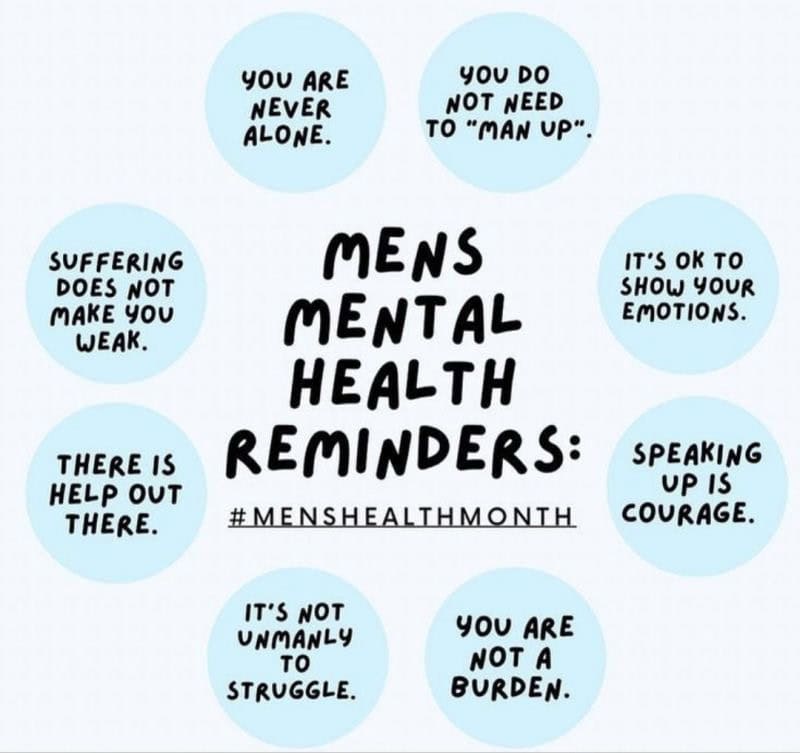
This is where Men’s Mental Health Month enters the conversation.
Because many men were taught to handle problems alone. Raise your hand if you have been told as a young boy… Little boys don’t cry, man up, walk it off, be tough!
For many men, those messages became a way of life. And while they may have created strong, hardworking, resilient adults, they often came with a hidden cost. Emotional isolation.
Many men struggle silently with loneliness, anxiety, grief, stress, and relationship challenges without ever realizing that asking for help might actually be the strongest thing they could do.
And this is where I’m going to offer a little tough love. If you’re going to take all of those childhood messages to heart. If you’re going to pride yourself on being tough, independent, resilient, and pulling yourself up by your bootstrap, then man up and get some therapy.
Seriously.
That may be the greatest flex you’ll ever demonstrate. Not bench pressing 300 pounds. Not working eighty hours a week. Not suffering in silence. Looking yourself in the mirror and saying, “Maybe I have some things I need to work on.” That’s courage. That’s strength. That’s growth. And guess what. It doesn’t change who you are as a person. It just changes the relationship relationships with the people closest to you.
Because here’s what I’ve learned after years of counseling, coaching, and frankly, making plenty of my own mistakes: we all have blind spots. We all have wounds. We all have coping mechanisms that served us at one point in our lives but may no longer be serving us now.
The strongest people I know aren’t the ones pretending they have it all figured out. They’re the ones willing to do the work. And why wouldn’t you want to heal? Why wouldn’t you want deeper connections? Why wouldn’t you want to experience love without constantly fearing it, running from it, chasing it, testing it, or sabotaging it?
At the end of the day, most of us want the same thing. We want to be seen. We want to be understood. We want to feel safe with another human being.
We weren’t built to do life entirely alone. Can it be done? Absolutely. People survive alone every day. But I don’t think we were designed for survival. I think we were designed for connection. And sometimes the very thing standing between us and the relationships we want isn’t another person. It’s the healing we keep avoiding.
So if you’re reading this during Men’s Mental Health Month, consider this your sign.
Do you want a healthier relationship?
Do you want more peace?
Do you want to stop carrying the weight of everything by yourself?
Circle Yes or No.
And if you circled “Yes,” then maybe it’s time to do the work.
Denise Donahue is a Licensed School Counselor, Certified Health Coach, Certified Teen Life Coach, Social and Emotional Wellness Consultant and in her spare time, she’s also the Mayor for the City of Wheeler
