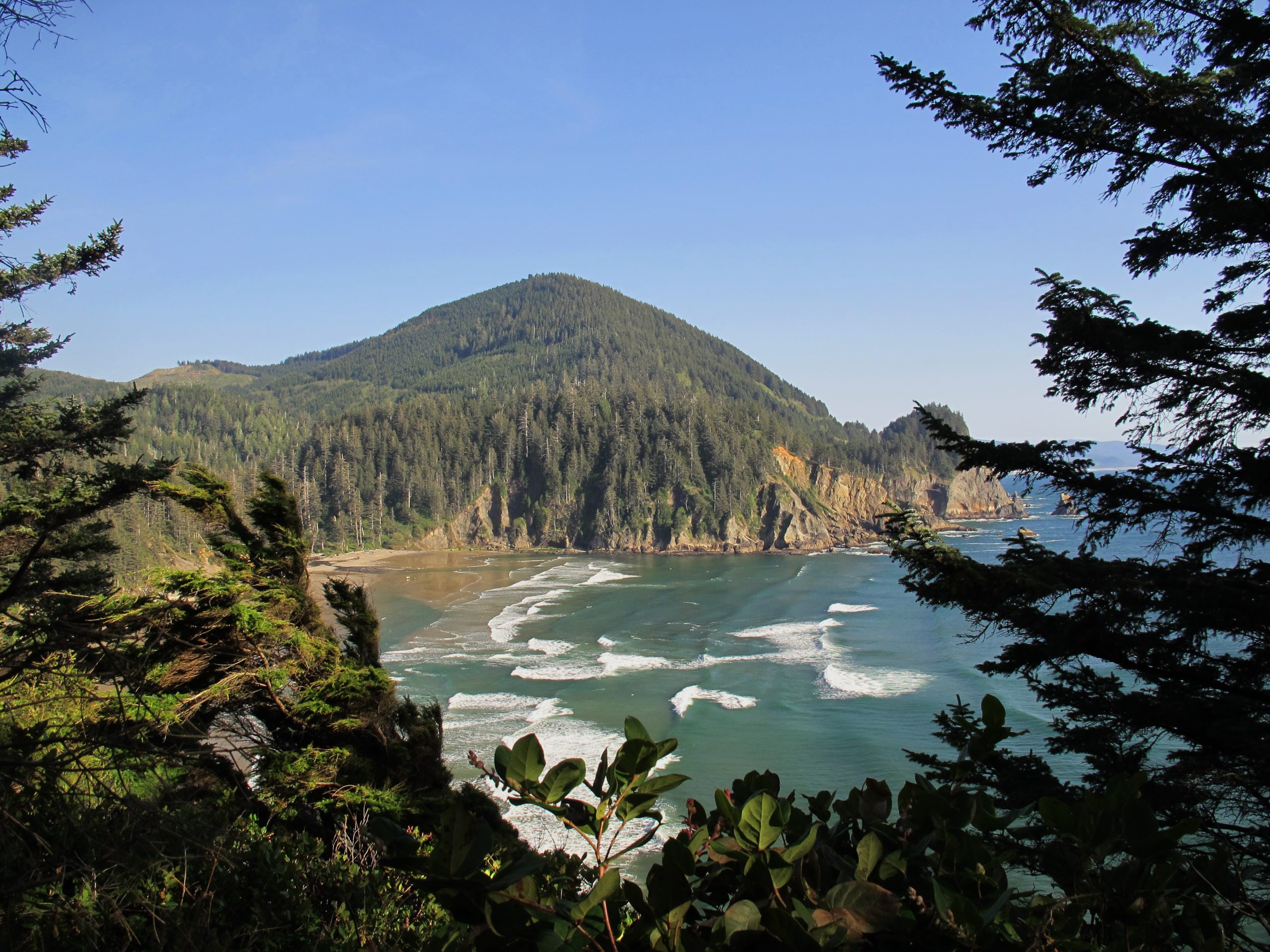
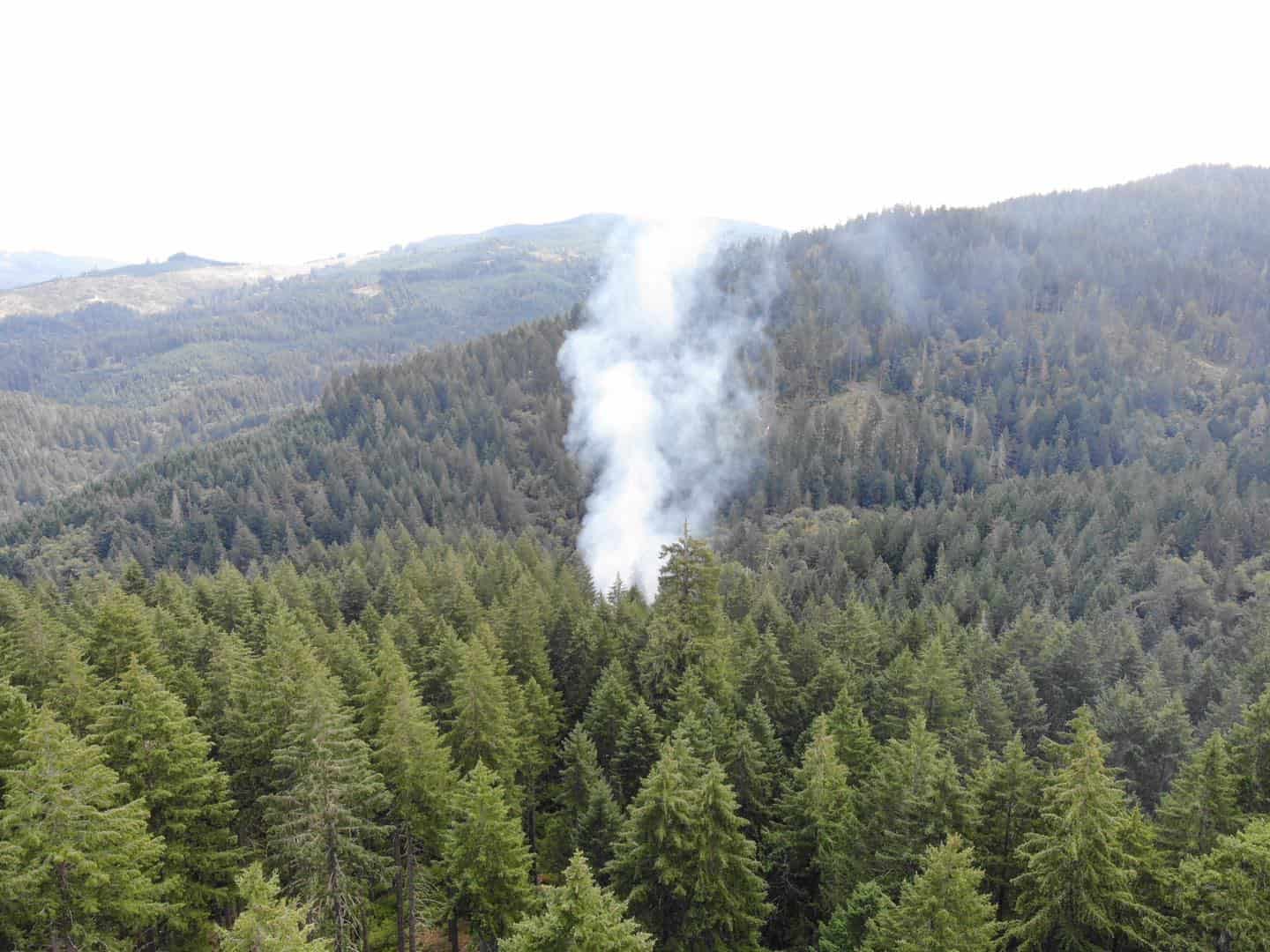



North Coast Communities for Watershed Protection is urging residents to speak out against two planned pesticide spraying operations covering 99.8 acres of timberland east of Rockaway Beach and Nedonna Beach.
One of the sites lies upstream from the aquifer that supplies drinking water to the City of Rockaway Beach. The land is owned by L&C Tree Farms and L&C TRS and managed by Nuveen Natural Capital. Ground crews from Nick’s Tree Service are scheduled to apply the chemicals by backpack between August 17 and October 31.
NCCWP says the spraying raises serious questions about the long-term health of the community’s water supply and nearby residents. The group is asking people to contact both the timber company and the Oregon Department of Forestry to express opposition.
“Pesticides applied to timberlands contain toxic chemicals that may negatively affect humans, wildlife, and ecosystem health through the air, land, and groundwater,” the organization stated.
The planned spray uses four herbicides commonly applied in forestry to control competing vegetation after logging or to manage brush.
Glyphosate is the best-known of the group. It is the active ingredient in Roundup and dozens of other products sold for home and commercial use. It has been the subject of extensive litigation. Thousands of people have sued claiming it contributed to non-Hodgkin lymphoma. Bayer, which owns the Roundup brand, has paid more than $10 billion in settlements. In June 2026 the U.S. Supreme Court ruled that most lawsuits arguing the company failed to warn about cancer risk cannot proceed under state law, because federal regulators do not require a cancer warning on the label. Bayer is still working on a separate multi-billion-dollar settlement covering many remaining claims.
Laboratory studies have shown that some glyphosate formulations can be highly toxic to tadpoles and young frogs, especially when the chemical reaches wetlands. Pure glyphosate is generally less harmful than the full commercial mixtures that include surfactants and other additives.
The other three chemicals — sulfometuron methyl (sold as Oust and similar products), metsulfuron methyl (sold as Escort, Ally, and related brands), and imazapyr (sold as Arsenal, Habitat, Chopper, and others), are used mainly in commercial forestry and vegetation management rather than by homeowners. They work by disrupting plant growth and are often chosen because they control a wide range of woody and herbaceous plants with relatively low application rates.
Regulators generally rate these three as low in acute toxicity to people and most wildlife when used according to the label. They are not classified as human carcinogens by the EPA. Still, questions remain about repeated or long-term exposure, especially when several herbicides are applied together across large areas near homes, schools, and drinking-water sources. Some studies have found effects on amphibians in wetlands, and critics argue that the combined, cumulative impact of multiple chemicals over years is not fully understood.
NCCWP’s core concern is exactly that combination: large-scale spraying of these products upstream of Rockaway Beach’s drinking-water aquifer and close to where people live and recreate. The group maintains that even approved chemicals carry risks when applied repeatedly in watersheds that supply public water.
Timber companies and the Oregon Department of Forestry typically respond that the products are registered for this use, that backpack application reduces drift compared with aerial spraying, and that label restrictions are designed to limit exposure.
Key details
Landowner: L&C Tree Farms / L&C TRS (managed by Nuveen Natural Capital)
Contact: David Dougherty, 503-440-3204
Spray operator: Nick’s Tree Service (backpack application)
Acres: 99.8
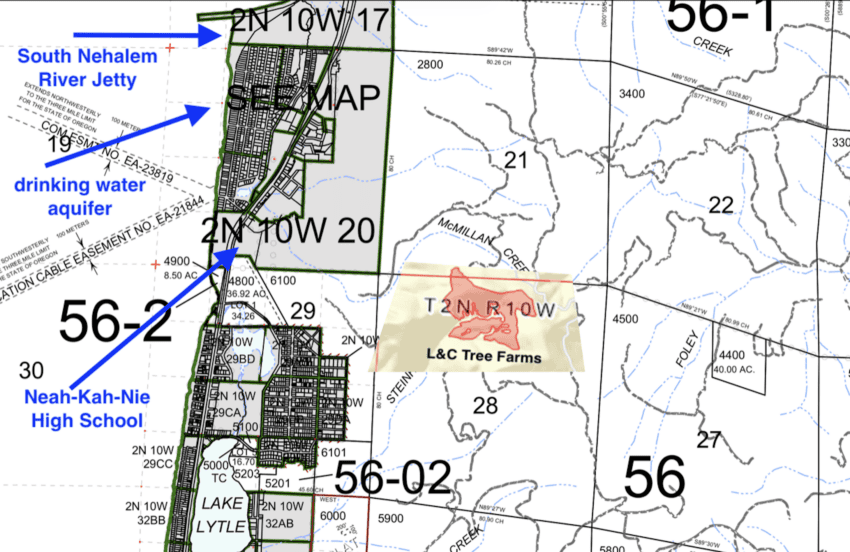
Location: East of Nedonna Beach and Rockaway Beach (map provided by NCCWP shows spray zones in red and nearby waterways in blue)
Window: August 17 – October 31, 2026
Contacts:
North Coast Communities for Watershed Protection: annemarie.nccwp@gmail.com or rockawaycitizen.water@gmail.com
Website: healthywatershed.org
Oregon Department of Forestry, Tillamook office: 503-842-2545
