Tillamook County Pioneer

News & People of Tillamook County. Every Day.

Menu
  • Home
  • Feature
    • Breaking News
    • Arts
    • Astrology
    • Business
    • Community
    • Employment
    • Event Stories
    • From the Pioneer
    • Government
    • Letters to the Editor
    • Non Profit News
    • Obituary
    • Public Safety
    • Podcast Interview Articles
    • Pioneer Pulse Podcast: Politics, Palette, and Planet – the Playlist
  • Guest Column
    • Perspectives
    • Don Backman Photos
    • Ardent Gourmet
    • Kitchen Maven
    • I’ve been thinking
    • Jim Heffernan
    • The Littoral Life
    • Neal Lemery
    • View From Here
    • Virginia Carrell Prowell
    • Words of Wisdom
    • Chuck McLaughlin – 1928 to 2025
  • Weather
  • Post Submission
  • Things to do
    • Calendar
    • Tillamook County Parks
    • Tillamook County Hikes
    • Whale Watching
    • Tillamook County Library
    • SOS Community Calendar
  • About
    • Contribute
    • Advertise
    • Subscribe
    • Opt-out preferences
  • Search...
Menu

NEWS UPDATE FROM STATE REPRESENTATIVE DAVID GOMBERG: Energy, Environment, and Elections

Posted on April 20, 2026 by Editor

4/20/2026

By Representative David Gomberg, House District 10

Dear Neighbors and Friends,

I wanted to focus this newsletter on several different energy and environment issues. But first I need to talk about elections.

Are you interested in the security of our voting system, the future of vote by mail, or your voting rights? Last week, I announced I have invited our chief election officer, Secretary of State Tobias Read for two Town Halls in our district. The first will be on Saturday, April 25 at 1:30pm in Philomath in the Philomath High School auditorium. The second will be at the Lincoln City Community Center on May 9 at 9:30am.

RSVP and pre-submit your questions.
Elections are in the news.

The Supreme Court is hearing a vote-by-mail case, Congress is considering the SAVE America Act, and Donald Trump just voted by mail after spending years claiming mail-in voting is cheating.

President Trump signed a sweeping executive order on Tuesday, March 31, that attempts to restrict mail-in voting, a White House priority certain to face significant legal challenges. The order directs the U.S. Department of Homeland Security along with the Social Security Administration to compile a list of voting-age American citizens in each state and share it with state election officials.

The order also requires the U.S. Postal Service to only send and receive ballots that include tracking barcodes.

The President’s order represents a major escalation in his effort to assert presidential control over elections, which under the U.S. Constitution are administered by the states. Trump last year attempted to unilaterally impose a proof of citizenship requirement to vote in federal elections in an executive order that was blocked in federal court.

The move also reflects a long-held focus by Trump and his allies on noncitizen voters. Studies have shown noncitizen voting is extremely rare.

For the most part, Oregonians love to mail their ballots. A proposal to ask Oregonians to end vote-by-mail elections in 2025 generated so much reaction that the Legislature’s website ceased to function properly. SB 210’s sponsor, state Senator David Brock-Smith, R-Port Orford, dubbed it “the bill that broke OLIS”

Oregon began to experiment with vote-by-mail in the 1980’s. Oregon voters approved Measure 60 in 1998 by a margin of 69.4 percent to 30.6 percent, making Oregon the first state to conduct elections entirely by mail. By 2000, Oregon became the first state in the country to hold a presidential election entirely by mail.

Back then, mail-in voting was a bi-partisan effort to make voting easier, improve access, lower administrative cost, and increase participation. Supporters argued it would save the state about $3 million in years with both a primary and a general election. Those are year 2000 numbers.

People worry the system is too loose. Too anonymous. Too easy to manipulate. Too far removed from the old picture in their head of a person walking into a polling place, standing in line, casting a ballot, and going home with an “I voted” sticker and mild self-satisfaction.

Some of those concerns are sincere. Some are exaggerated. Some are fed by social media, rumor, partisan messaging, and the modern American habit of becoming wildly certain about things we haven’t actually studied. But they are real in the sense that people genuinely feel them.

Of course voter rolls should be accurate. Of course signatures should be checked. Of course chain of custody matters. Of course deadlines should be clear. Of course the public should have confidence that lawful ballots are counted and unlawful ballots are not.

No election system is perfect. But mail voting is pretty good. A 2020 analysis by Oregon’s Legislative Fiscal Office found 38 criminal convictions for voter fraud across 20 years and nearly 61 million ballots cast in Oregon. That works out to roughly 0.000006 percent. And, the Brookings Institution later found that nationally, mail-voting fraud occurred at an average rate of about four cases per 10 million votes, or roughly 0.000043 percent.

The SAVE America Act would require documentary proof of citizenship to register to vote. Easy. Clean. Tough. Politically marketable.

The problem is that people change their names. People misplace documents. Only about half of Americans have passports. Critics have also warned that married women whose legal names differ from their birth certificates could face particular problems.

And the broader problem is obvious: if you pile enough documentation requirements onto voting, you will absolutely make it harder for some ineligible people to get through. You will also make it harder for a much larger number of eligible people to get through.

I support an election system that is safe, secure, easy, and allows as many qualified citizens to vote as possible. I want more people making decisions, not less. And I will continue to support Oregon’s vote-by-mail.

Please take the opportunity to share your own thoughts with Secretary Read.

Some parts of this report were originally published by my friend, Representative Cyrus Javadi from Tillamook. Read more of his thoughts here.

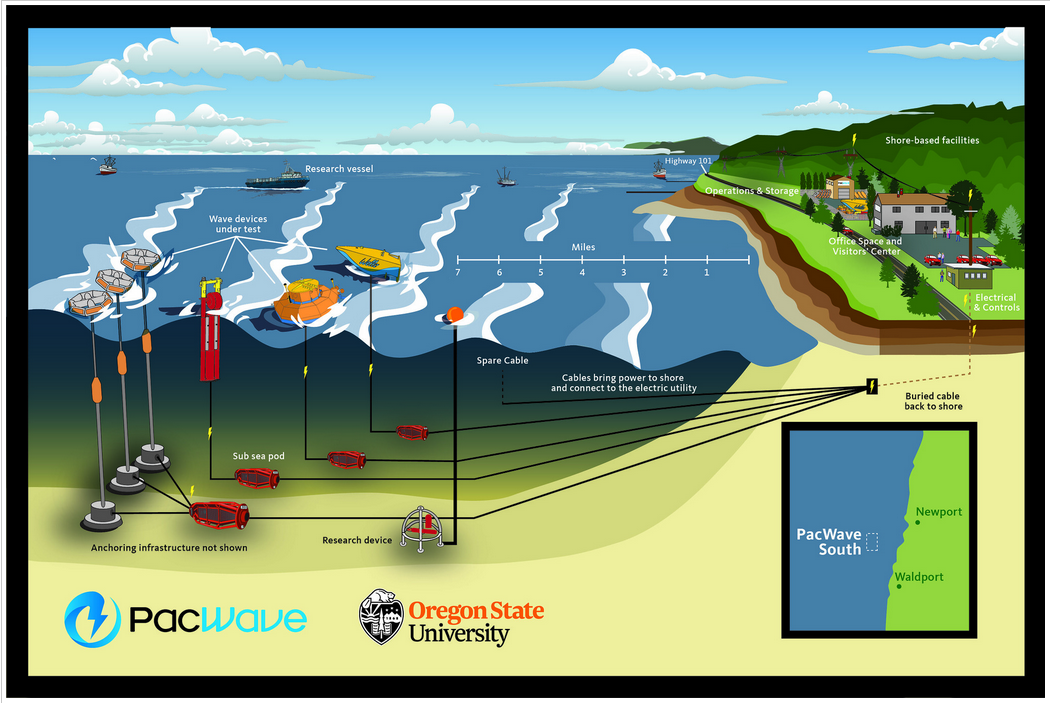
After more than a decade of planning, permitting, community outreach, drilling, cable-laying and construction, Oregon is now home to the largest-capacity wave energy testing facility in the world.

Construction on Oregon State University’s $80 million PacWave South near Newport wrapped up this spring. But uncertainty around federal funding for the research and technology development threatens to derail plans to use the facility for testing wave energy converters. At least one wave energy developer initially slated to deploy its technology at PacWave has canceled its testing plans because they lost a federal grant.

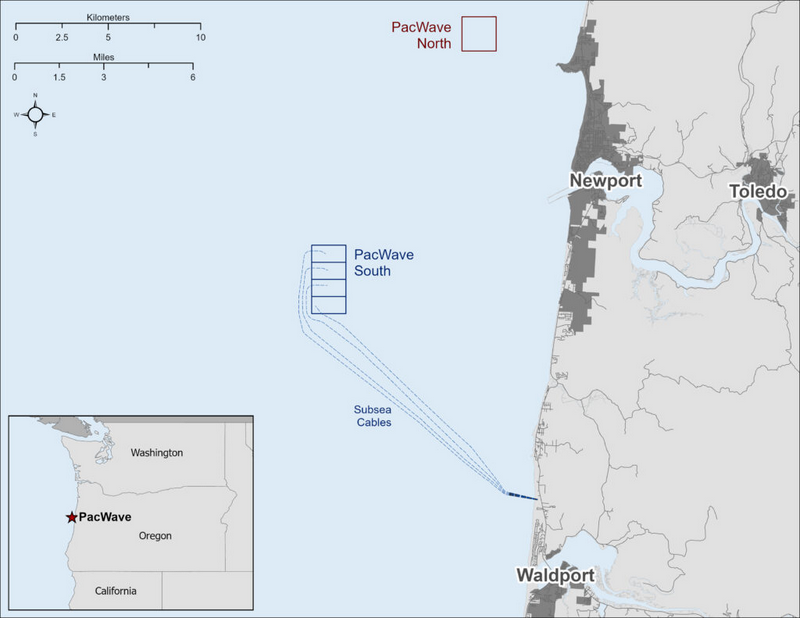
Seven miles out into the ocean off the central Oregon Coast, the PacWave test facility is invisible to the naked eye. It’s a rectangle—roughly 2 by 1 nautical miles—divided into four testing areas.

Just south of Newport, a new wave energy facility called PacWave is now operational. Researchers from across the country will use the facility to test the best way of harnessing the ocean’s energy and to explore how effectively it can be transformed into usable power.
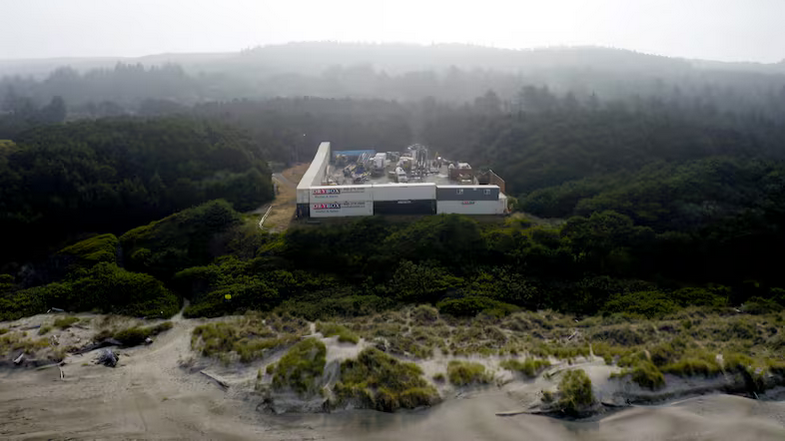
An aerial image taken in the summer of 2021 shows part of the PacWave wave energy test facility on the Oregon Coast. The facility will provide wave energy developers a place to test their devices in the open ocean and transport the energy they produce back to the grid. Construction crews installed conduit and high-capacity power cable under the beach at Driftwood State Park and out into the ocean to the test site 7 miles offshore.
Having a place like PacWave to test new technology creates opportunities for wave energy developers. They’ll be able to see how their energy converters perform in real ocean conditions without spending time and money navigating federal and state permitting processes. Beginning next year, companies will begin deploying their wave energy prototypes, connect to a power cable on the seafloor, and track how well their devices convert energy from Oregon’s mighty waves into usable electricity.

There’s enough available energy in the waves off Oregon alone to power 6.4 million homes—that’s more homes than in Oregon and Washington combined. There are waves even when the sun isn’t shining and the wind isn’t blowing. But wave energy technology lags far behind solar and wind.

Meanwhile under the Trump Administration, grant programs across many science and technology fields have been canceled, and federal funding for research has been eliminated or delayed. Bottom line: Oregon’s PacWave testing facility is now complete, but delays and cuts to federal funding for renewable energy development could impact its future.

Read more here.

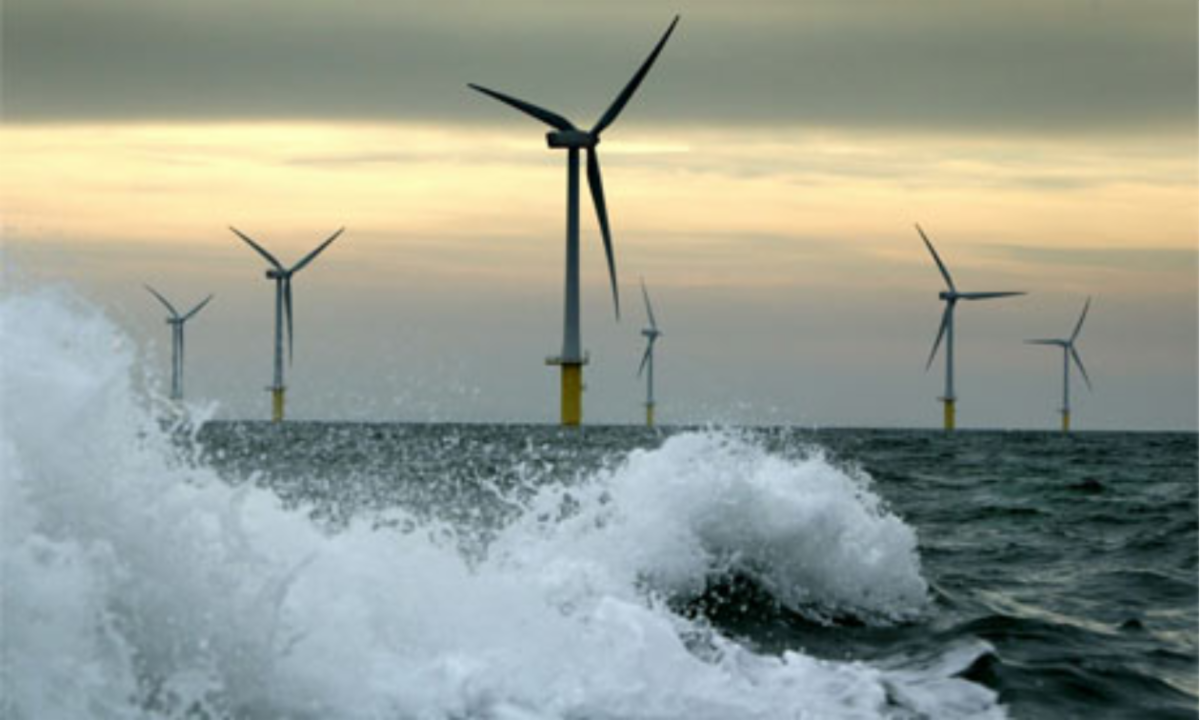
Efforts to advance a floating offshore wind industry on the Oregon Coast have been challenged by opposition from coastal communities, tribes, the fishing industry and changing federal administrations. (Photo courtesy of the Bureau of Ocean Energy Management.)
Several years ago, offshore wind energy was seen as key to meeting Oregon’s climate goals.

In 2021, the Oregon Legislature set a goal of powering 1 million homes with offshore wind by 2030, and former President Joe Biden set the goal of building up 15 gigawatts of offshore wind energy capacity along the coasts of the U.S. by 2035, with a total of 30 gigawatts deployed by 2030.

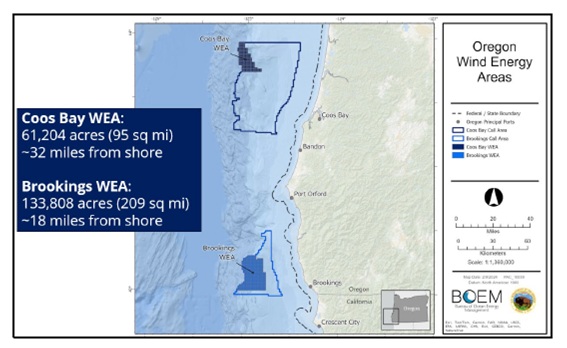
By 2024, the federal Bureau of Ocean Energy identified several sites off the coast of northern California and two sites off southern Oregon’s coast as having great potential for generating offshore wind energy. They included 61,200 acres near Coos Bay and nearly 134,000 acres off Brookings. The Coos Bay site is 30 miles from the coast, and the Brookings area is 20 miles away. Combined, they could potentially generate more than 3.1 gigawatts of renewable energy, enough to power 1 million households.

Informational meetings were held in coastal communities. Local residents, tribes, the fishing industry and this legislator showed up to voice concerns. The state Legislature passed a bill directing the agency to plan for the state’s role with the Oregon Offshore Wind Energy Roadmap.

The roadmap outlines four paths forward:

  • No offshore wind energy.
  • Oregon develops a full-scale offshore wind energy industry.
  • The state participates only economically in the offshore wind industry, such as parts manufacturing or research and development, but does not host projects.
  • Oregon hosts a pilot offshore wind energy project to gain more experience before decisions to expand into a full-scale industry.


By the fall of 2024, facing growing opposition from locals and calls to pause development from Oregon’s governor and congressional delegation, the Bureau of Ocean Energy and Management called off its plans to auction off the sites and potential developers pulled out. Then in July of 2025, as part of President Donald Trump’s resistance to wind energy, the ocean energy agency rescinded all designated Wind Energy Areas identified for possible development on the U.S. Outer Continental Shelf, more than 3.5 million acres in all.

Oregonians have one more month to weigh in on the future of floating offshore wind energy in the state, including a path forward that would abandon the effort for now.

  • Email dlcd.oswroadmap@dlcd.oregon.gov
  • Take the Offshore Wind Energy Roadmap Survey

Comments will be accepted until April 27. Read more in the Oregon Capital Chronical and the Lincoln Chronical.

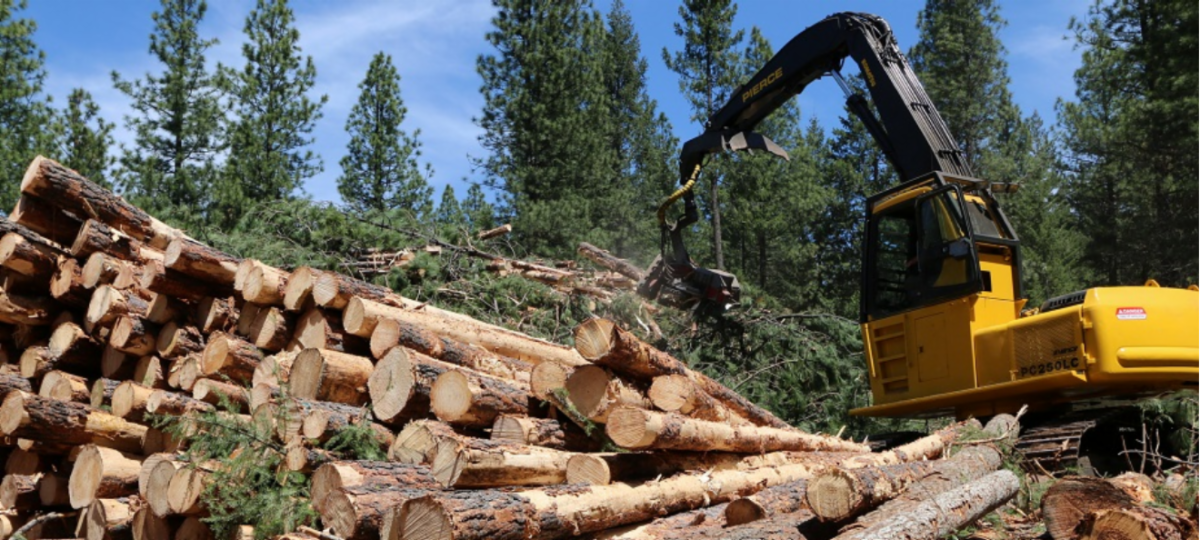
Federal officials are attempting to open up millions of acres of forests in western Oregon for “maximum” timber production to “advance Trump administration priorities,” including areas that are home to federally protected, vulnerable species.

The Bureau of Land Management in late February announced it would change the Western Oregon Resource Management Plans that have governed logging and conservation on 2.5 million acres of forests in 17 Oregon counties for decades. About three-quarters of the federal acres, known as O&C lands for having once belonged to the Oregon and California Railroad, are protected from regular logging. But in its notice of intent, the land management bureau indicated it could return those acres to 1960s harvest levels, at times more than 10 times average harvest levels over the last two decades.

About three-quarters of federal O&C forests in western Oregon are protected from regular logging. But Bureau of Land Management indicated it could return those acres to 1960s harvest levels, more than 10 times current harvest levels. (Photo courtesy of the Bureau of Land Management.)
Forest practices on federal lands have fiscal consequences for local government. Timber revenue from O&C Lands, a checkerboard of federally owned forests, is shared with 18 Oregon counties. Recently, the Department of the Interior increased local governments’ share of logging revenue to 75% from a previous 50% split.

In a statement, Travis Joseph, president of the American Forest Resource Council, a trade association for the commercial logging industry, celebrated the bureau’s announcement that more acres would open for logging.

Arran Robertson, a spokesperson for Oregon Wild, said the plans governing the management of the federal forests in western Oregon exist because species were being driven to extinction in the 1990s. Conservationists have called it a plan to return to a time when the agency and the U.S. Forest Service clear cut roughly 3 square miles of old-growth forests per week, and an attempt to override years of court precedent protecting vulnerable species that depend on the stands.

Oregon’s U.S. Sens. Jeff Merkley and Ron Wyden and Reps. Suzanne Bonamici, Janelle Bynum, Maxine Dexter, Val Hoyle and Andrea Salinas, all Democrats, said such generational change in logging practices deserves far more public scrutiny.

In a letter to Kim Prill, the acting director for the region at the Bureau of Land Management, they asked for a pause and more public comment. Specifically, they want 60 more days of public comment and for bureau officials to hold at least one in-person public meeting in each of the land management bureau districts that would be affected by the increased logging.

Officials said in the announcement they would not hold any meetings before releasing a draft proposal for new logging.

As a state legislator, I have little say over federal policy. While the comment period for this proposal has concluded, you can still contact our federal delegation: Congresswoman Val Hoyle, Senator Ron Wyden, and Senator Jeff Merkley.

  • Read more on OPB
  • Read more in Oregon Capital Chronical
  • Read more in Capital Press
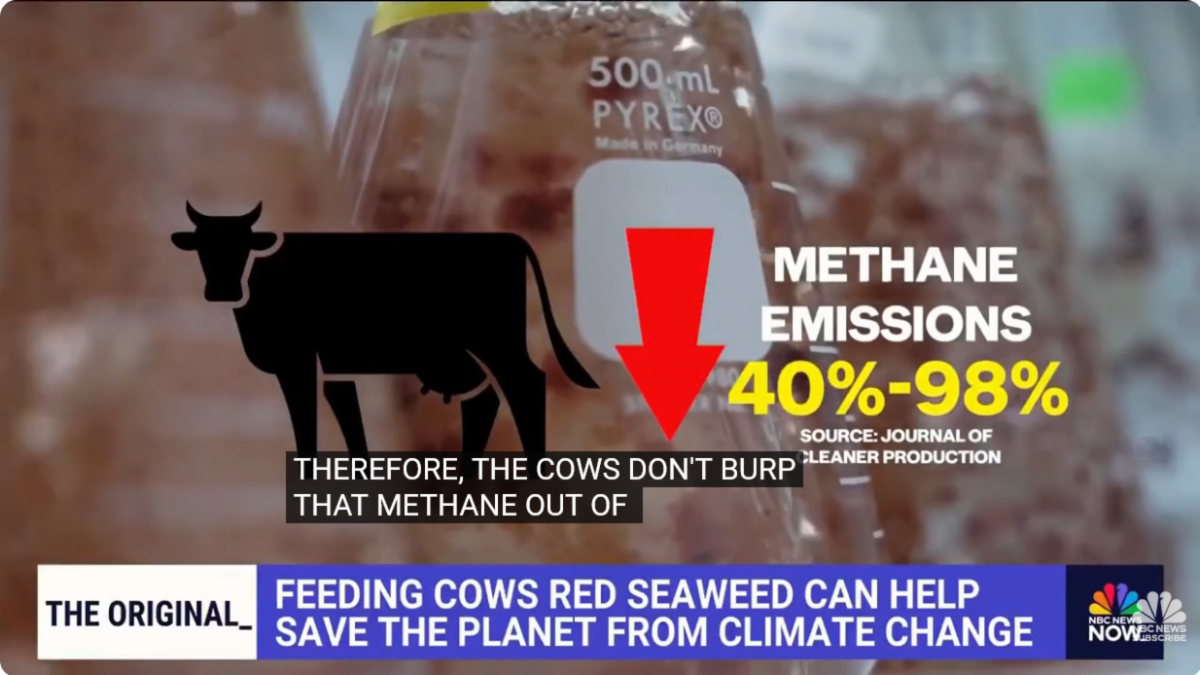
Imagine growing seaweed in your backyard, making money, and helping reduce the methane gas that cows burp.

Methane is a potent greenhouse gas with 80 times more warming power than carbon dioxide, over a 20-year period. It’s responsible for about 30 percent of the global warming we’re experiencing today, and agriculture is the largest human source of methane emissions. Within that, cows are the single biggest offenders—burping out methane as a byproduct of their digestion process.

Can seaweed grown on the Oregon coast help prevent beef cattle in eastern Oregon from producing too much methane? A five-year grant from the U.S. Department of Agriculture will try to determine if adding seaweed to the diet of cattle is an effective way to reduce greenhouse gas emissions.

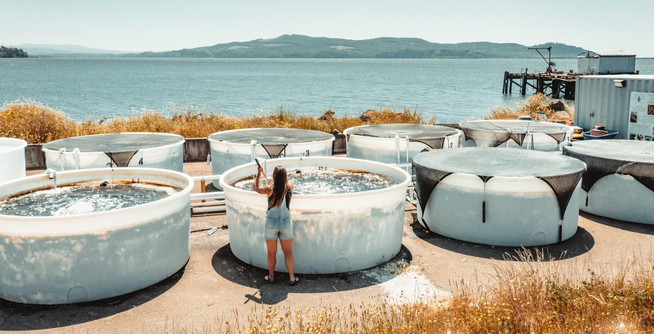
Oregon Seaweed has farms in Bandon and Garibaldi where it grows and harvests dulse seaweed for a variety of uses.
The researchers will supplement the cattle feed with Pacific dulse grown by Oregon Seaweed, a Garibaldi-based company started by former businessman and OSU adjunct professor Chuck Toombs. During his time at OSU Toombs discovered the seaweed strain growing at the Hatfield Marine Science Center in Newport, which had been working to domesticate it for 25 years.

But wait—there’s more.

Dulse has a salty ocean flavor with a slightly funky, fishy aroma that mellows out as it cooks. When cooked, the seaweed takes on a rich and salty umami-forward flavor.

Dulse that’s been smoked and fried has often been compared to bacon in terms of taste. And though it may not be a perfect substitute, it does carry a very similar flavor profile (smoky, salty, rich) while bringing pleasant notes of the sea.

Me? I’m not sure. I think it still tastes like seaweed.

Although seaweed is the fastest growing aquaculture sector in the U.S., the nation’s production accounts for less than 0.1 percent of global supply, and pales in comparison to countries like South Korea, which has a seaweed industry that employs thousands and produces exports worth $750 million.

Check out this three-minute video.
Susan and I have just returned from a long delayed and long anticipated vacation. I wrote last week and this week’s newsletter before leaving, because I wanted to continue to share important, timely information, and because I didn’t want you to miss me—too much.

I’m back and you can expect to again see me out in the community, a bit jet lagged but otherwise attentive.

Thanks as always for reading.

To contact Representative Gomberg – email to rep.davidgomberg@oregonlegislature.gov

Slide Slide Slide Slide Slide Slide Slide Slide Subscribe Contribute

Ads

Featured Video

Tillamook Weather

Tides

Tillamook Church Search

Cloverdale Baptist Church
Nestucca Valley Presbyterian
Tillamook Ecumenical Service

Tillamook County Pioneer Podcast Series

Archives

  • Home
  • EULA Privacy Policy
  • Contact
  • Opt-out preferences
  • Search...
Share on facebook
Facebook
Share on pinterest
Pinterest
Share on twitter
Twitter
Share on linkedin
Linkedin
Catherine

Recent Posts

  • GORDON'S WEEKLY WEATHER UPDATE 4/20/26: First of week cloudy, light rain; Second half of week brings back fair, dry, mild conditions

    April 20, 2026
  • NEWS UPDATE FROM STATE REPRESENTATIVE DAVID GOMBERG: Energy, Environment, and Elections

    April 20, 2026
  • CITY OF TILLAMOOK: Road Closure on 9th Street between Cedar & Elm for Sewer Lateral Repair April 22-23

    April 20, 2026
©2026 Tillamook County Pioneer | Theme by SuperbThemes

Manage Cookie Consent
To provide the best experiences, we use technologies like cookies to store and/or access device information. Consenting to these technologies will allow us to process data such as browsing behavior or unique IDs on this site. Not consenting or withdrawing consent, may adversely affect certain features and functions.
Functional Always active
The technical storage or access is strictly necessary for the legitimate purpose of enabling the use of a specific service explicitly requested by the subscriber or user, or for the sole purpose of carrying out the transmission of a communication over an electronic communications network.
Preferences
The technical storage or access is necessary for the legitimate purpose of storing preferences that are not requested by the subscriber or user.
Statistics
The technical storage or access that is used exclusively for statistical purposes. The technical storage or access that is used exclusively for anonymous statistical purposes. Without a subpoena, voluntary compliance on the part of your Internet Service Provider, or additional records from a third party, information stored or retrieved for this purpose alone cannot usually be used to identify you.
Marketing
The technical storage or access is required to create user profiles to send advertising, or to track the user on a website or across several websites for similar marketing purposes.
  • Manage options
  • Manage services
  • Manage {vendor_count} vendors
  • Read more about these purposes
View preferences
  • {title}
  • {title}
  • {title}