Tillamook County Pioneer

News & People of Tillamook County. Every Day.

Menu
  • Home
  • Feature
    • Breaking News
    • Arts
    • Astrology
    • Business
    • Community
    • Employment
    • Event Stories
    • From the Pioneer
    • Government
    • Letters to the Editor
    • Non Profit News
    • Obituary
    • Public Safety
    • Podcast Interview Articles
    • Pioneer Pulse Podcast: Politics, Palette, and Planet – the Playlist
  • Guest Column
    • Perspectives
    • Don Backman Photos
    • Ardent Gourmet
    • Kitchen Maven
    • I’ve been thinking
    • Jim Heffernan
    • The Littoral Life
    • Neal Lemery
    • View From Here
    • Virginia Carrell Prowell
    • Words of Wisdom
    • Chuck McLaughlin – 1928 to 2025
  • Weather
  • Post Submission
  • Things to do
    • Calendar
    • Tillamook County Parks
    • Tillamook County Hikes
    • Whale Watching
    • Tillamook County Library
    • SOS Community Calendar
  • About
    • Contribute
    • Advertise
    • Subscribe
    • Opt-out preferences
  • Search...
Menu

NEWS UPDATE FROM STATE REPRESENTATIVE DAVID GOMBERG: Helping Small Communities Survive and Thrive

Posted on August 4, 2026 by Editor


By Representative David Gomberg, House District 10

8/3/26

Dear Friends and Neighbors,

Last week I was able to spend a day with Jim Carmack, Oregon State Director of Rural Development for the US Department of Agriculture (USDA).

I often talk about the challenge of small towns paying for big projects. USDA Rural Development is positioned to help, and so I jumped at the chance to build a relationship and more importantly, to arrange a series of one-hour meetings to help Jim better understand our problems and opportunities.

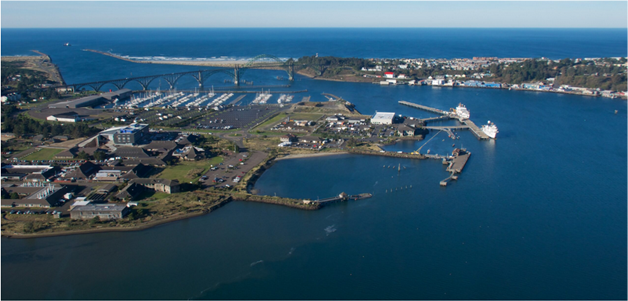
We met with leaders in the science community to discuss the role of Hatfield in understanding our changing ocean and climate. We talked about the work being done, the number of researchers and students on campus, reductions in research dollars, the importance of NOAA in Newport, the new buildings we have built, and the declining state of our older buildings.

The Hatfield Marine Science Center is located on Yaquina Bay in Newport. It is also the homeport for two NOAA ships and provides logistical, engineering, electronics, maintenance and administrative support to all the ships in the agency’s Pacific fleet. (Port of Newport photo)

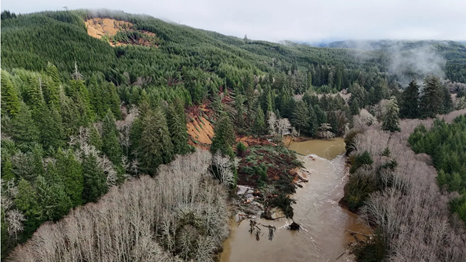
In the second hour, economic development was front and center. The panel included the President of our Community College with news about the new Advanced Technology & Trades (OCATT) Center.The Economic Development Alliance of Lincoln County (EDALC) re-emphasized the importance of NOAA to local ocean science and local jobs.Our award-winning Small Business Development Center talked about innovation and entrepreneurism. I was pleased the 100% fish program was front and center.The Confederated Tribes of Siletz Indians outlined programs they provide their members, infrastructure needs in the City of Siletz, and the effect of Highway 229 landslides on the ability to connect programs and residents who travel from the tribal offices in Siletz to Chinook Winds in Lincoln City.Lincoln City’s Urban Renewal Agency/Economic Development Department stressed the importance of housing and a desire to expand industrial lands. An overriding topic was the changing role of natural resource industries, the importance of fishing, the benefits of tourism, and the evidence that retirement was a central but often unrecognized part of our coastal economy.We met with directors of our district ports. Topics included the need and cost for constant dredging, the relationship between our commercial and recreational fleets, ship repairs, and the challenge and cost of abandoned derelict vessels. Potential uses of the Rogue building and again NOAA were on the agenda.After lunch, we met with a leader in the agriculture and woodlands community and had a pressing conversation about the Highway 229 landslide that separated many of our local farmers.


Aerial photos show the landslide along Highway 229 that slid into the Siletz River. Provided by the Oregon Department of Transportation.
Local city managers joined us to talk about infrastructure—the simple fact that too many of our water systems are at capacity, wearing out, or falling apart. Aging pipes leak as much as 30% of our water before it reaches our taps. Droughts and dry spells increase competition for resources, affect tourism, fish processing, and agriculture, and drive-up consumer costs. I pointed to Siletz, a town of 1,100 with a $12 million sewer problem. We’ve secured state grants but there are still gaps in our ability to cover the cost. Waldport has completed sewer lines to industrial lands and a new water storage facility, but needs more. Each town in our district is looking for funding support and the chance to sit down with “the Feds” was meaningful.

In the afternoon, we enjoyed a vibrant conversation with representatives from the commercial fishing fleet. They detailed changes in the marketplace, the role of processors in the supply chain, and the problem of regulatory changes that could discourage investment. These were fishing families that had worked our waters for generations and were worried about the future.

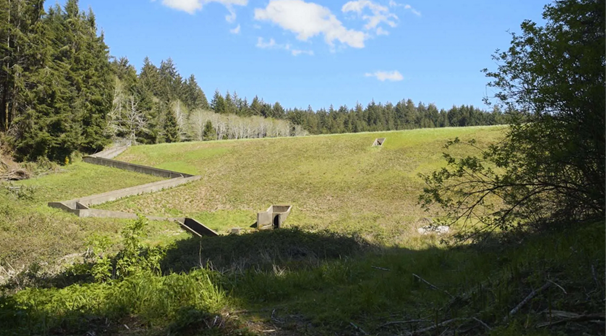
The final meeting of the day was with a group from the City of Newport to discuss the Big Creek Dams. This primary water supply for the city is at risk as one of Oregon’s oldest and most seismically vulnerable earthen dams.

Built in 1951 and 1969, the Big Creek Dams are earthen dams constructed of compacted layers of soil, rock and clay. Foundational soil vulnerabilities revealed during inspection indicate these structures are at risk of failure, especially during a seismic event.
Over the past ten years, we have secured $20 million in city and state funding and some promises of federal support. But costs have escalated and are now approaching $200 million. The City is re-evaluating plans. That required me to step in at the state level to authorize shifting “replacement dam” dollars to “dam replacement” dollars.

Our conversations with Director Carmack brought new attention to this daunting problem and raised new possibilities for loans and attention to the fish ladder expense. For me, this discussion was the most encouraging of the day.

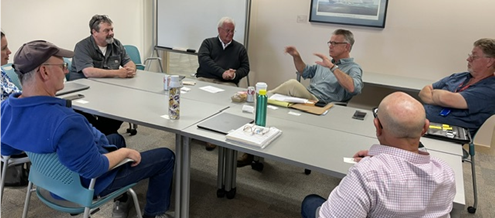
Newport Mayor Jan Kaplan, Manager Nina Vetter, and city staff meet with me and the USDA.
The next morning, I took Jim on a brief drive through part of the Echo Mountain Complex Fire zone. With fires raging across much of Oregon today, I wanted him to see how fire-impacted communities looked six years later. Too many homesites are still barren and too many families still in loss or limbo.

We committed to continue to work together before Jim drove north to Tillamook and Astoria.

Regular readers know I have used my leadership position in legislative budget committees to steer state dollars to local ports, parks, water, and sewer projects. We have enjoyed some success with dozens of allocations totaling over $100 million. That success improves your quality of life, reduces your cost of living, and supports the local economy. But the work continues.


Over recent weeks, we have reached out to our district cities and dozens of special districts to identify funding priorities for the 2027 legislative session. I’m a believer that preparing early improves the odds of getting needed dollars. Money will be tight next year. But most of these dollars come from lottery supported bond allocations.


The Oregon Lottery is a major source of revenue for the state, bringing in nearly $2 billion each biennium. Lottery dollars support public education, economic development, state parks and watershed enhancement, veterans’ services, Outdoor School, problem gambling treatment and prevention, and more. Lottery funds are also used to pay debt service on Lottery-backed revenue bonds. The state sells these bonds to fund projects in communities around the state.

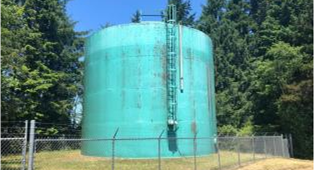
“The City of Waldport was grateful to announce that through the efforts of our State Representative David Gomberg, the City was the recipient of nearly $2.2 Million in directed funding for a water tank rehabilitation and replacement project.”
Last year, about $500 million was available for projects like ours. There were over $5 billion in requests. So clearly the competition is fierce. That’s why I’m working now to position our cities, fire and water districts to succeed.

On a related note, this past week, I was appointed to chair the Blue Economy Task Force.

Oregon’s Blue Economy Task Force was established under Senate Bill 1525, enacted on March 31, 2026, to study ocean-based industries, evaluate state economic plans, and protect coastal ecosystems.

  • Ecosystem Protection: Balancing industry growth with the preservation of coastal and marine environments.
  • Sector Evaluation: Studying fisheries, marine biotechnology, sustainable aquaculture, tourism, and recreation.
  • Strategic Roadmap: Identifying gaps in current programs and providing formal recommendations to the legislature.

This 17-member panel includes representatives from industry, recreation and tourism, the Tribes, labor, academia, and economic development organizations.

Our beloved state is on fire and that should give each of us pause.

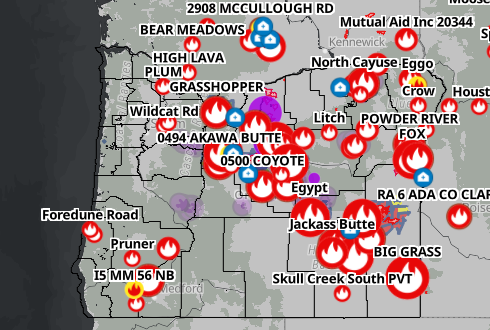
Across our state, the predictions of an intense wildfire season are coming to pass—lightning strikes have sparked wildfires over the last two weeks, including the Akawa Butte Fire near Sisters, which is currently the top priority fire in the nation with over 6,000 people under some level of evacuation status. Fortunately, the area saw heavy rain this past week that may have slowed the fires and saved much of the city.

My intense gratitude goes out to everyone who’s working so hard to protect our communities, including those in the Oregon fire service, our wildland partners, and crews from other states.

Oregon is less than 200,000 torched acres away from surpassing its worst wildfire season on record, and red flag conditions of low humidity and strong winds in much of the state may have pushed it past that mark this weekend. Fire officials warned Friday that gusty and dry conditions could lead to rapid fire growth across multiple regions, prompting evacuation warnings, road closures and concerns about worsening air quality.

There have been more than 1,300 fires so far, many of which were the result of two multi-day lightning events in central and northeastern Oregon. Currently, more than 30 active large wildfires are burning in Oregon. All but one of those fires are located east of the Cascades. There are more than 12,000 personnel assigned to large fires statewide, including thousands of contractors hired through incident resource agreements with Oregon Department of Forestry (ODF).

Access the dashboard here to find wildfire updates, evacuations maps and more. This dashboard is a product of the Oregon Department of Emergency Management.
You can read about Oregon’s major fires here.

And its still July, with fire officials warning the state’s most dangerous stretch of the season, August and September, is still ahead. Oregon’s peak wildfire season generally runs from July through September, and this year was expected to be particularly intense because of widespread drought conditions. Below-average winter snowfall, combined with record warmth that caused our limited snowpack to melt early, heightened the risk of severe wildfires.

Over the last ten years, Oregon has averaged around 2,000 fires and 600,000 acres burned during our fire seasons (with significant variation by year). This year, we’ve already hit the 1,000 fire mark, with more than 1.1 million acres burned. That means we are in the middle of what could become another historic wildfire season.

With the increase in fire activity has come an increase in firefighting costs. The current estimated gross emergency suppression costs for ODF this fire season are $118.1 million, with estimated net costs of $79.1 million. Net costs are total (gross) costs minus reimbursements expected from federal and other state agencies. Net costs are paid by the state General Fund (income tax dollars).

In preparation for what was projected to be a worse than “normal” fire season, the Legislature invested $150 million in a new natural disaster fund, more than tripling the state’s emergency wildfire reserve, and we created a dedicated account for federal wildfire reimbursements that the Department of Forestry can access as needed without the need to call a special legislative session.

Oregonians forced to flee wildfires won’t have to worry about losing certain insurance coverage while they’re under evacuation orders, state regulators said Friday. The Oregon Division of Financial Regulation issued an emergency order requiring property and casualty insurers to temporarily stop canceling or refusing to renew policies covering homes, businesses, and other risks in ZIP codes under wildfire evacuation notices.

At the same time, the Trump administration has denied two of Governor Tina Kotek’s requests for firefighting-assistance grants as wildfires ravage eastern Oregon. While the Federal Emergency Management Agency approved three of the state’s requests for financial assistance for the Lower Dry Creek, Awaka Butte and Grasshopper fires, the agency chose not to grant the state emergency federal funding for the East Evans Creek and Rowe Creek fires.

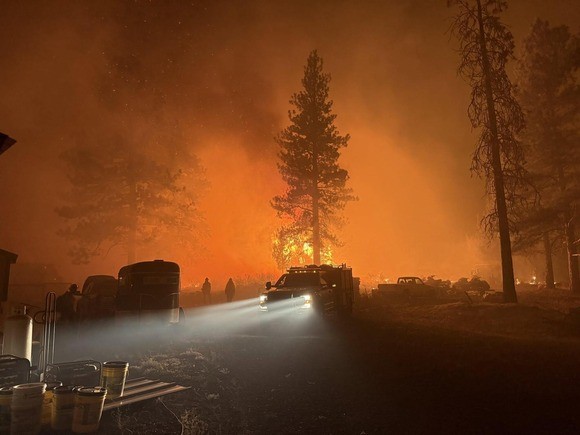
Crews provide structural protection for private residences in the path of the Akawa Butte Fire.
A statewide hotline for people in Oregon affected by wildfires or wildfire-related air quality has been set up by the Oregon Department of Human Services. The number to call is 1-833-699-0554. Anyone experiencing any of the following situations is advised to call for additional resources:

  • Lost a home or property
  • Evacuated and have ongoing needs
  • Are sheltering in place and have wildfire-related needs
  • Are affected by wildfire smoke or poor air quality
  • Have another need or concern caused by a wildfire

The human services office notes that the hotline does not guarantee financial assistance or enrollment for a particular program.

If a call is not answered, callers are encouraged to leave a message and will receive a return call within one business day, according to the Department of Human Services.

Given the wildfire threat statewide, we must be prepared for anything, especially when planning outdoor activities:

  • Monitor the state wildfire map for current fire danger levels and follow seasonal restrictions for your area.
  • Use TripCheck to plan your route and stay informed.
  • Check air quality conditions at your destination and nearby areas.
  • Register for local emergency alerts, understand evacuation procedures, and make sure you have the right gear and the appropriate amount of water at the ready.
Somehow it is August already. Susan and I have enjoyed the Fisherman’s Wives Homeport Dinner, several concerts, arts and cultural gatherings. I imbibed at the Toledo Art, Oysters & Brews, auctioned for a local fundraiser, and took questions at a community forum.

The coming week is filled with zoom meetings and conferences and a few necessary trips out of district.

Enjoy our cooler mornings and sparkling afternoons. And please have a good thought for the folks on the fire line, those whose homes, property or communities are at risk, and for the future of our green state.

email: Rep.DavidGomberg@oregonlegislature.gov

phone: 503-986-1410

address: 900 Court St NE, H-480, Salem, OR, 97301

website: http://www.oregonlegislature.gov/gomberg

Ads

Featured Video

Tillamook Weather

Tides

Tillamook Church Search

Cloverdale Baptist Church
Nestucca Valley Presbyterian
Tillamook Ecumenical Service

Tillamook County Pioneer Podcast Series

Archives

  • Home
  • EULA Privacy Policy
  • Contact
  • Opt-out preferences
  • Search...
Share on facebook
Facebook
Share on pinterest
Pinterest
Share on twitter
Twitter
Share on linkedin
Linkedin
Catherine

Recent Posts

  • HUGGS TIME: HELPING US GIVE & GET SUPPORT - GRIEF GATHERING AUGUST 12TH AT OLD WHEELER HOTEL

    August 4, 2026
  • VIEW FROM HERE: AI Is New. Our Addiction to Outrage Is Not. (Part 2 of 2)

    August 4, 2026
  • PAUSE ON PLASTICS RECYCLING PROGRAM IN NORTH TILLAMOOK COUNTY

    August 4, 2026
©2026 Tillamook County Pioneer | Theme by SuperbThemes

Manage Cookie Consent
To provide the best experiences, we use technologies like cookies to store and/or access device information. Consenting to these technologies will allow us to process data such as browsing behavior or unique IDs on this site. Not consenting or withdrawing consent, may adversely affect certain features and functions.
Functional Always active
The technical storage or access is strictly necessary for the legitimate purpose of enabling the use of a specific service explicitly requested by the subscriber or user, or for the sole purpose of carrying out the transmission of a communication over an electronic communications network.
Preferences
The technical storage or access is necessary for the legitimate purpose of storing preferences that are not requested by the subscriber or user.
Statistics
The technical storage or access that is used exclusively for statistical purposes. The technical storage or access that is used exclusively for anonymous statistical purposes. Without a subpoena, voluntary compliance on the part of your Internet Service Provider, or additional records from a third party, information stored or retrieved for this purpose alone cannot usually be used to identify you.
Marketing
The technical storage or access is required to create user profiles to send advertising, or to track the user on a website or across several websites for similar marketing purposes.
  • Manage options
  • Manage services
  • Manage {vendor_count} vendors
  • Read more about these purposes
View preferences
  • {title}
  • {title}
  • {title}

Powered by
►
Necessary cookies enable essential site features like secure log-ins and consent preference adjustments. They do not store personal data.
None
►
Functional cookies support features like content sharing on social media, collecting feedback, and enabling third-party tools.
None
►
Analytical cookies track visitor interactions, providing insights on metrics like visitor count, bounce rate, and traffic sources.
None
►
Advertisement cookies deliver personalized ads based on your previous visits and analyze the effectiveness of ad campaigns.
None
►
Unclassified cookies are cookies that we are in the process of classifying, together with the providers of individual cookies.
None
Powered by