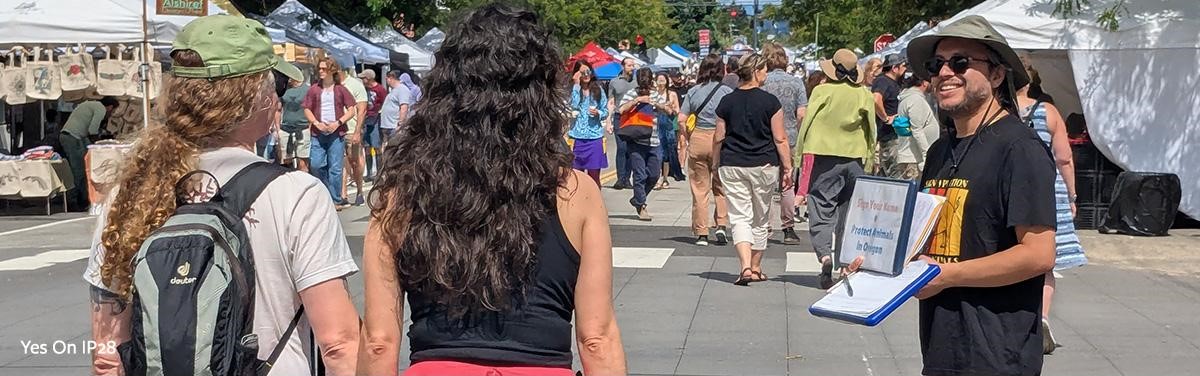
| The measure is promoted and largely financed by Portland activist David Michelson and End Animal Cruelty, a 501c(4) non-profit that engages in education and advocacy in support of ballot initiatives.
Gov. Tina Kotek has spoken against the initiative, describing it as “the wrong direction” for the state.
“I don’t support IP 28 because I believe criminalizing standard agricultural practices and lawful activities like hunting and fishing would be the wrong direction for Oregon,” Kotek said in a statement. “As your Governor, I will continue to champion strong animal welfare protections while respecting the long-standing traditions and livelihoods of farmers, ranchers, fishermen, and hunters across our state.”
Kotek’s gubernatorial opponent, Senator Christine Drazan, R-Canby, has sought to link her with the unpopular petition.
“IP 28 is an all out assault on Oregonians’ way of life pushed by Tina Kotek’s allies,” Drazan said in a statement posted to social media. “It criminalizes ranchers, farmers, meat producers and threatens to kill thousands of jobs. It would mean the end of hunting and fishing in Oregon, killing not only traditions and ending access to an essential source of food, but butchering natural resource-based industries that support hunting and fishing.”
Preventing animal cruelty matters.
I am one of the leading voices for animal welfare in the Oregon Legislature. But I have to oppose the measure as well. Because regardless of where you stand on hunting or animal rights, IP 28 isn’t just another ballot measure. It’s a vision for a very different Oregon.
I believe in constructive, productive, and necessarily incremental change. This measure would immediately implement major changes in the fishing, farming, dairy, livestock and recreational industries.
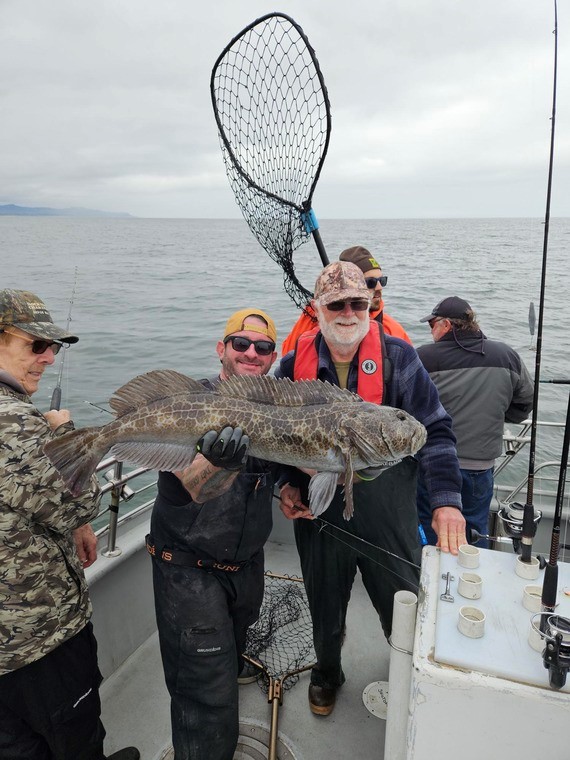
Producing locally raised foods would be outlawed while restaurant and grocery prices would increase substantially when meat and dairy products are shipped in from out of state. Hunting and fishing for food is declining but remains a part of Oregon’s heritage. And significantly, IP 28 would actually reduce the hard-won penalties for some egregious forms of animal abuse.
Euthanizing a pet dog or cat would still be allowed. But offering the same end-of-life relief to a horse or cow would be prohibited.
Once the proposal is certified for the ballot, it will receive a “fiscal statement”. As a budget writer in Salem, it is hard to imagine how much money would be needed for compensation of lost income, job retraining, animal care, and “opening private or state-run grocery stores in communities to improve food access” as required by this measure. Given the broad extent of our fishing industry, hunting and angling recreation, or cattle ranching, I would expect that number to be in the billions.
I’m also concerned that galvanizing the subject and the public as this initiative inevitably will, will make it harder to continue legislative progress on animal welfare in Oregon.
Most Oregonians don’t hunt elk or raise cattle. But nearly everyone depends on farmers, fishers, ranchers, dairies, poultry producers, and local food systems every single day. Whether you buy beef from a rancher in Eastern Oregon, eggs from a local farm, milk from an Oregon dairy, or chicken from a grocery store, food doesn’t simply appear on a shelf. It comes from a system built around raising animals, producing food, and feeding communities. Even the growing number of vegetarians and vegans among us rely on a stable and working economy. Most that I talk to hope for a gradual and constructive transition, not a sudden disruption.
According to multiple published interviews, Michelson, the measure sponsor, has openly acknowledged that it is unlikely to pass in 2026. Instead, he has described the effort as part of a longer campaign to shift public attitudes about animals and their use by humans. According to one interview, the goal is persistence and changing the conversation over time.
You can read the full measure here.
Meanwhile, the whole thing may be for naught. Congress in Washington DC is looking to roll back state animal welfare laws as it wrangles over reauthorization of the federal farm bill. A pending version of the legislation includes provisions which would block states from regulating the raising of livestock. The measure takes direct aim at California’s Proposition 12, which requires farms to meet specific standards providing animals freedom of movement, cage-free confinement and minimum floor space. |