10/12/2026
By State Representative David Gomberg, House District 10
Dear Neighbors and Friends,
Greetings from Beijing, where interestingly, the price of gasoline is about $5.22 a gallon. Compare that to $8.71 in London, $9.20 in Paris, and $9.46 in Athens. Last I checked, regular was $4.67 in Newport.
While we’re at it, gas taxes in Oregon are 40 cents per gallon, 56.5 cents in Washington, and 63.4 cents in California. Since 2019 before the pandemic, gas sales in Oregon have declined 80 million gallons. So congratulations! The gas taxes you pay are actually going down. But that means gas tax revenue is going down while costs to maintain roads and bridges continue to increase.
Roads here in China look pretty good. And yes, I’m in China and thinking about roads and bridges back home.
ODOT has struggled with funding maintenance and operations in recent years. That is due in part to declining revenue from the gas tax and inflation, but also because of restrictions on how the agency can spend its money that require legislative approval to be changed. Lawmakers moved funds around in the agency’s budget earlier this year to prevent service cuts and laying off critical staff.
With the cuts forecast as necessary in 2027, we will have reduced ODOT spending by $628 million since 2025. Between August and September, the group Governor Tina Kotek tasked with vetting solutions to the state’s transportation budget crisis surveyed Oregonians about what they think the state’s spending priorities should be. I wrote about the “Rebuilding Our Transportation Vision Survey” several weeks ago and urged you to share your own thoughts.
About 8,650 Oregonians from all counties except Wheeler responded to the survey. Multnomah County was overrepresented in the results, with 18% of the state’s population but 39% of the responses. That may account for results regarding public transit and bike paths.
While the feedback is not statistically representative and instead reflects the attitude of people choosing to comment, results are clear. Oregonians believe we should prioritize maintenance and the preservation of infrastructure, roads, and bridges.
“The results suggest that Oregonians want transportation agencies to focus on stewardship: caring for what the state already has, improving reliability and safety, and demonstrating accountability in how dollars are used.”
The first question in the survey asked respondents to rank six transportation priorities:
- Improving safety
- Reliable public transit
- Easier to bike and walk
- Better traffic flow
- Maintaining the system, such as fixing potholes, clearing debris and snow
- Preserving key assets, such as bridges and roads needing replacement
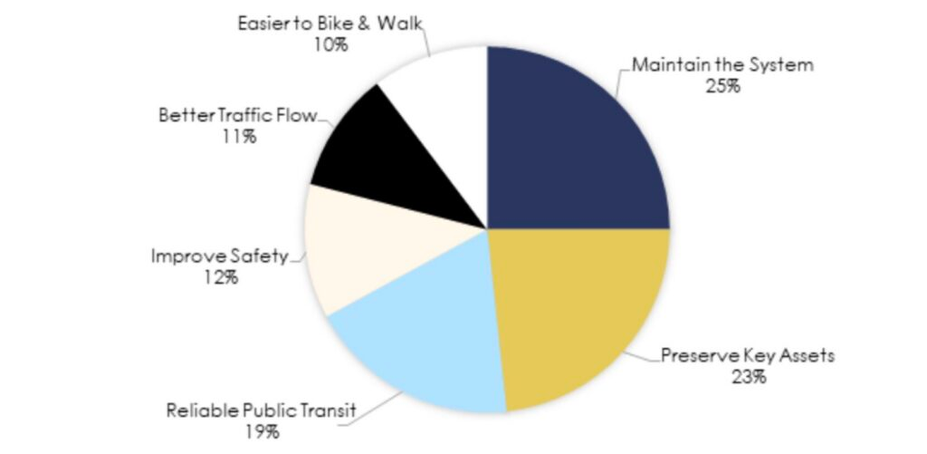
Maintaining the transportation system was ranked as the top priority in the survey, followed by preserving key assets, improving safety, making it easier to bike and walk, reliable public transit, and better traffic flow.
| The chart above shows the average percentages survey respondents allocated to each category. (Screenshot from analysis.)
The second question in the survey asked Oregonians how they would allocate transportation funding, asking them to put the percentage of funding they think each priority category should receive. Respondents said the transportation agency should focus its funding on maintaining its infrastructure, followed by focusing on preserving assets and public transit.
The third question asked respondents about what type of transportation service reductions would impact them the most. The answers mirrored responses to the first question, saying not maintaining the system, preserving key assets and improving safety would impact them the most.
The last question was an optional and open-ended question, asking Oregonians what a well-managed transportation system looks like to them.
Of the more than 8,600 responses to this question, an analysis conducted by Oregon Department of Transportation staff found that 20% of responses want a transportation system that offers different transit options that work for people of all income levels and communities. Another 19% of responses called for more reliable public transit options, while 17% of responses said the transportation agency should focus on budgeting and delivering projects. The remaining responses asked the agency to focus on maintaining roads and bridges, improving traffic flow, and eliminating perceived wasteful spending. |
|
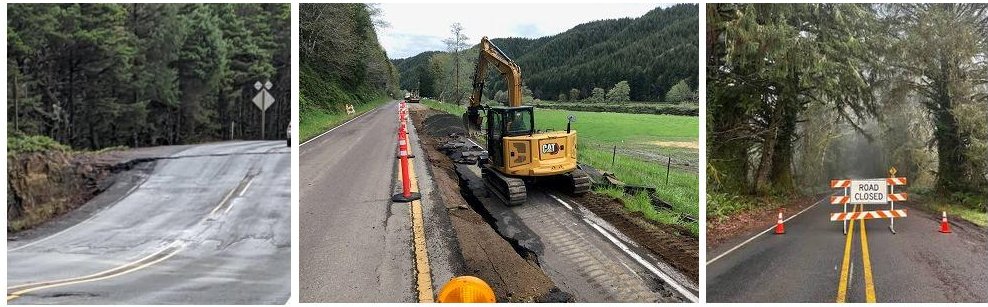
| Maintaining the system, preserving key assets, and improving safety on Coastal and Coast Range highways. |
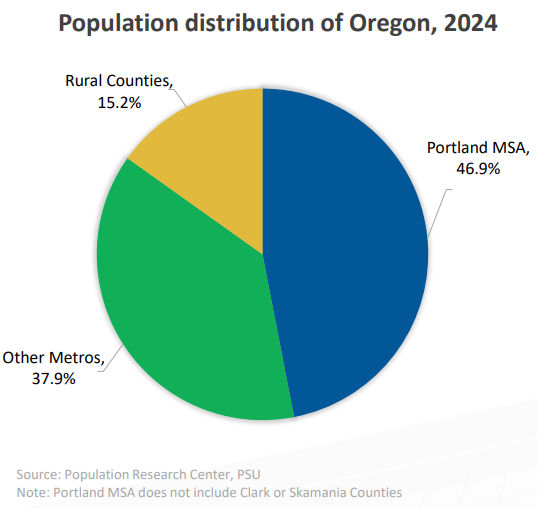
| I encourage readers to respond to these surveys to make sure rural voices are well heard as decisions evolve. Fully 85% of Orgeon residents live in metropolitan areas. So here is another opportunity to share your thoughts. |
| Two weeks ago, I wrote about another Oregon hot button issue—Data Centers.
Oregon is experiencing unprecedented demand from large-scale energy users including data centers and artificial intelligence, creating a need to establish clear siting criteria and assessment protocols before further development occurs across our state’s landscape. Proactive planning in partnership with local governments is essential to protect Oregon’s iconic forests and farmlands, sustain thriving local economies, and preserve affordability for all Oregonians.
The Oregon Data Center Advisory Committee (DCAC) has released its Preliminary Learnings and Questions Document, outlining its findings and areas for further consideration as it develops recommendations on data center development in Oregon. Read the report HERE!
The committee is currently accepting public comments through October 24, 2026, at 5 p.m. Oregonians are encouraged to share their perspectives, respond to the questions in the report, provide additional information, and identify any gaps in the committee’s findings.
Public input is an important part of this process and will help inform the committee’s final recommendations, which are expected to be presented to Governor Tina Kotek by December 2026.
The rapid growth and development of data centers throughout the region has become one of the top concerns for Oregonians. If you or anyone you know has thoughts on what the future of data centers should look like, do not neglect this opportunity!
You can submit public comments HERE!
And if you are interested in learning more about the work of the committee, you can read more HERE. |
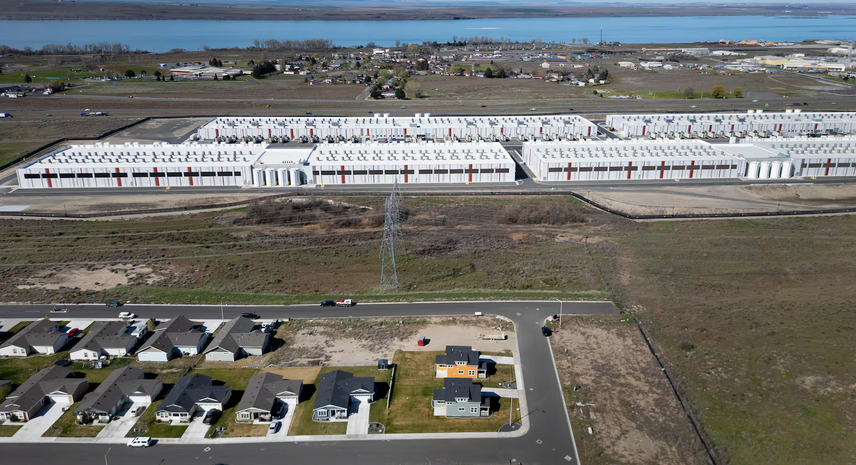
| An Amazon data center in Boardman. Saskia Hatvany / OPB |
| Here is some other transportation news:
Planning a trip through Portland? Work on Interstate 5 in the Rose Quarter continues as crews repair and strengthen the aging highway, including resurfacing the concrete deck and replacing bridge joints. I-5 southbound is closed between I-84 and I-405 in Portland as part of the work, with the continuous directional closure selected to improve worker and public safety, reduce construction time, and deliver a longer-lasting roadway. Learn more: I-5 Rose Quarter Improvement Project.
Willamette Week provided a good update in their last edition.
“We’ve passed the halfway point of the five-week Interstate 5 southbound closure. Before the closure began Sept. 11, the Oregon Department of Transportation warned that travel times through the sticky parts—such as getting around the 2-mile closure via I-205 or I-405—could take two to three times longer than usual. It hasn’t been quite that bad, but almost: Travel times are double to 2.25 times as long as normal during the afternoon peak.” |
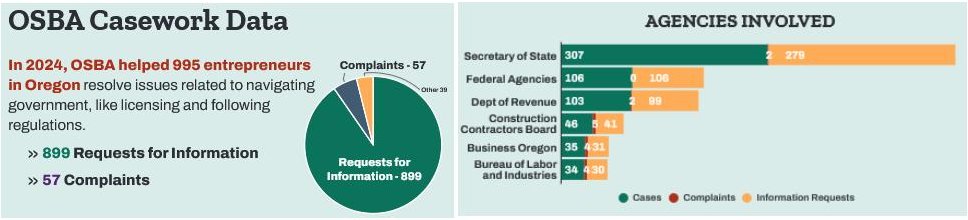
| If you’re a small business owner running into roadblocks with a state agency, the Office of Small Business Assistance (OSBA) is here to be your champion. Their job is to make state government work better for Oregon entrepreneurs—so you can spend less time on red tape and more time running your business. |
| OSBA is housed within the Secretary of State’s Corporation Division. They can help businesses and nonprofits with 100 or fewer employees if you have problems or complaints about state agencies or local governments. The office’s role is to help get answers and resolve problems in an independent, objective, and professional manner. They have broad powers to investigate complaints and make recommendations, but cannot force agencies to do something, to stop doing something, or to undo something.
Services are free and confidential. Learn more here. |
| Free Legal Resources for Oregonians: Navigating a legal issue can be challenging, but free and low-cost legal resources are available to help. Oregon Law Help connects Oregonians with legal information, legal aid services, lawyer referral programs, and community resources covering a wide range of civil legal matters. |
| Whether you are seeking information about housing, family law, consumer issues, public benefits, or other legal concerns, Oregon Law Help can help connect you with available resources and assistance.
To learn more, visit www.oregonlawhelp.org. |
| During a recent Emergency Board subcommittee meeting, I made a minor stink.
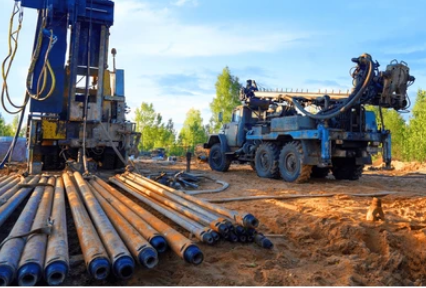
A state agency is helping Oregonians who have lost their wells to wildfire or who need new wells because of ongoing drought conditions. They said the program was so successful they needed more money. I wanted to know why grants were clustered in some other parts of Oregon and none were in my part of Oregon.
The answer was that some well drilling companies were effectively promoting the program and generating more business. Fine. I’ll take this opportunity to promote it here.
The Oregon Water Resources Department’s Well Abandonment, Repair, and Replacement Fund (WARRF) provides financial assistance to low to moderate income homeowners experiencing severely declining water levels and wells damaged or destroyed by wildfire. OWRD is currently inviting grant applications from qualifying low-to moderate-income homeowners or qualifying members of a federally recognized Tribe in Oregon to help cover the cost of repairing or abandoning and replacing dry wells located in counties with a 2026 Governor’s Drought Declaration—including those with severely declining water levels—or wells damaged or destroyed by wildfire, when the well no longer provides enough water for essential in-home uses like drinking, cooking, and bathing.
There is $1million in funding that was appropriated by the Legislature in June 2026. This funding can only be spent in counties with a Governor’s Drought Declaration or wells impacted by wildfire. For wildfire costs, there is no time limit for when the damage occurred, however, generally, they will not reimburse for work completed prior to receiving a grant. |
| None of the counties in our district have received a drought declaration. But many people here are still recovering from the 2020 fires.
I made a point to ask the agency if the grants applied to storage tank improvements or just to wells.
Storage tanks only qualify if they are part of an eligible well repair or replacement, not on their own. Typically, this occurs when a new well is drilled or the existing well is deepened and it does not produce enough water to support the household. The statutes authorize the fund to be used “to permanently abandon a water well or to repair or replace a water well that is used for household purposes.” |
| So there is a quick review of several programs that could help your family or business. Next week, I plan to talk about some broader issues that affect all Oregon businesses and your cost of living here. |
|