





By Vivi Tallman*
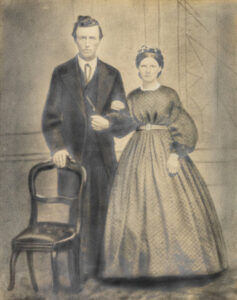 In 1897, Jane (Scovell) Gray and James Gray traveled from their homestead at the north end of Tillamook County to Corvallis, Oregon to join 200 Grange members from around the state for the annual Oregon State Grange convention. For four days they made the arduous journey—by buckboard to Tillamook, by stage with an overnight in the coast range to Carlton, and by rail to Corvallis.
What was the Grange that it could inspire such effort from these local farmers?
Founded in 1867 by Oliver Kelly, the Grange is our nation’s oldest agricultural organization. Kelly was a young farmer who worked for the new U S Department of Agriculture. What Kelley saw when he visited small farms damaged by the Civil War moved him to create a national organization to represent farmers. Early Grange language said, “We propose meeting together, talking together, working together, buying together, selling together and, in general, acting together for our mutual protection and advancement, as occasion may require.”
Kelley was a Mason and a version of Masonic ritual was integrated into the Grange structure. The Grange, however, had a key difference from other fraternal organizations. From the beginning women members had an equal vote as men and could hold the same offices.
The Grange movement was immediately popular with farmers across the country. By 1875 there were 21,000 local Granges with 860,000 members. From its earliest days, Grange lobbying efforts were effective. The birth of State Agricultural Schools, the Extension Service, 4H, Rural Free Mail Delivery, and the Farm Credit System are largely due to Grange lobbying. Grangers lobbied for rural electrification. Here in Tillamook County we take our TPUD for granted, but what made it possible was an amendment to the Oregon State Constitution in 1930, called the Grange Amendment which authorized the creation of utility districts for the purpose of supplying water and electric energy. Urban interests hotly opposed this amendment, as reflected in the October 9, 1930 Portland Oregonian article that stated: “It would be difficult to exaggerate the menace to Oregon’s prosperity and general welfare that resides in the proposed constitutional amendment for ‘people’s water and power utility districts.’” Laws backed by the National Grange became known as Granger laws.
The early Grange movement saw that farmers were at the mercy of railroads, warehouse companies, and merchants for supplies and for marketing their crops. In 1871 the Illinois legislature responded to pressure from the Grange and set maximum rates that private companies could charge for the storage and transport of agricultural products. After this law was passed, the grain warehouse firm of Munn and Scott was found guilty of violating the law but appealed the conviction on the grounds that the Illinois law represented an unconstitutional deprivation of property without due process of law. In the 1877 Munn v. Illinois case, the U.S. Supreme Court upheld this “Granger Law”, affirming the right of government to regulate private industries.
The Grange in Oregon
The Oregon State Grange was founded in 1873 and community Granges soon began popping up in the Willamette Valley. In 1895 the Fairview Grange became the first Grange in Tillamook County, with 43 charter members. The next year, 1896, the White Clover Grange was established in north county. Grangers met in the Onion Peak School House on the west side of the north fork of the Nehalem River, on the homestead of E K Scovell. Members such as Margaret and James Gray enjoyed the social and political benefits of gathering with their neighbors, families facing similar challenges. Over the next 20 years, the Onion Peak School moved several times, taking the Grange with it, first to the east side of the river, and then to the road now called Highway 53.
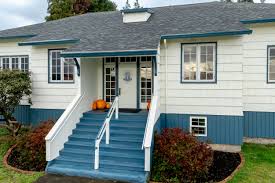
For reasons that remain a mystery, the White Clover Grange went dormant in 1926. However, just five years later it reemerged when 18 members went to the first meeting at the Odd Fellows Hall in Wheeler. Very quickly there were discussions about moving to the Mohler schoolhouse, empty since the consolidation of that school district with Nehalem. The handsome two room building, like the current NCRD in Nehalem, had been designed by well known Portland architect A.E. Doyle. In 1932 the Grange leased the building for $1/year for 30 years with “Grange to keep up insurance and repair of building”. At some point in the next year, that arrangement changed, and the Mohler School District #28 sold the Mohler schoolhouse to the White Clover Grange for $1.
The White Clover Grange members continued in the Grange tradition of advancing the interests of small farmers and rural residents while also providing fellowship. The minutes from the May 1931 meeting state that the members unanimously adopted a resolution against the sale of oleomargarine in Tillamook County. At the same meeting there were discussions of how to best furnish grain and hay to north county as well as opinions about hydroelectric power, the federal gas tax, a state sales tax (generally against it) and a state graduated income tax (preferred). The minutes end with a note that the Thursday morning meetings will start at 10:30 sharp, with a 10 cent fine for latecomers, and a 25 cent fine for absentees.
In the 40s 50s and 60s the White Clover Grange continued to be a popular gathering place for local farm and rural families, gradually moving more to fellowship than political activism. There were potlucks, birthday and anniversary parties, memorials, and nights for playing pinochle, music and dancing. The building was remodeled to suit these needs; a stage was added, along with a back hall, two bathrooms, and a basement kitchen. Minutes describe events, list the costs of building upkeep, and take note of members who have experienced hardship. There are comments recorded about changes in milk prices, cost of machinery, plus reports from various standing committees. Long time member Wesley Batterson, who worked for the Oregon Game Commission and was chair of the Wildlife Committee, always had something interesting to report about elk or deer populations, opening of fishing season, seeding of pasturelands, or birds seen. And at the end of each month’s business meeting, there was a time for an Entertainment where members shared a reading or a poem, or joined the sing-a-long.
In 1943, the White Clover Grange started a tradition of hosting the Mohler 4H Fair each July, using both the building and the outdoor field. Long time Grange member Annie Lommen remembers: “I was 14 and in the 8th grade. Because of the war we weren’t supposed to have large gatherings and with gas rationing, getting to Tillamook for the County Fair wasn’t practical anyway. So we 4H kids from Nehalem had our own fair at the White Clover Grange. I made a red checkered dress which I showed.” After the end of WWII, the Mohler 4H Fair continued giving north county 4H kids an opportunity to practice before the bigger County fair in August. Young people showed cows, pigs, goats, chickens and rabbits, and displayed their sewing, photography and wood working projects.
In the 1950’s, as Annie Lommen explains, “we got TV”. Farmers and families who once looked to Grange gatherings for their evening entertainment and connection began staying home. Soon TV repeaters installed at the top of Neahkahnie mountain boosted signal from Portland stations, and ownership of televisions became universal. With the advent of television the drive to get together lessened. But the importance of the Grange as a site for special events never wavered.
In February of 1996, dramatic flooding of the Nehalem river caused severe damage to dairy farms and families living in the Tidelands area outside of Nehalem. Three local women stepped up to meet the needs of impacted families and for the next 8 months, North Tillamook County Flood Relief used the Grange as their office and distribution point. Diane Myers, Irene Koch, and Jackie Brown often worked for 10 hours a day to bring donated groceries, clothing, supplies and household appliances to more than 50 families who had lost everything. They connected local farmers with donors from afar who offered hay, grain, and fencing materials, plus large equipment and seed to repair damaged fields.
The Grange Today
In the 1980s Grange membership nationwide began to fall off. While in 1875 there were 21,000 community Granges in the US, today there are only 1300. In the 1950s, Tillamook County had nine active granges. Today are only three. When Oliver Kelly founded the Grange, 75% of the US population lived in rural areas and 25% in cities. By the turn of the 21st century, that figure had flipped to roughly 25% in rural areas and 75% in cities. North Tillamook County reflects the nationwide trend in which farms have bigger acreages and fewer families are involved in farming. For the White Clover Grange this has showed up as a sizable drop in both the number of Grange members and in young people participating in the White Clover 4H Club.
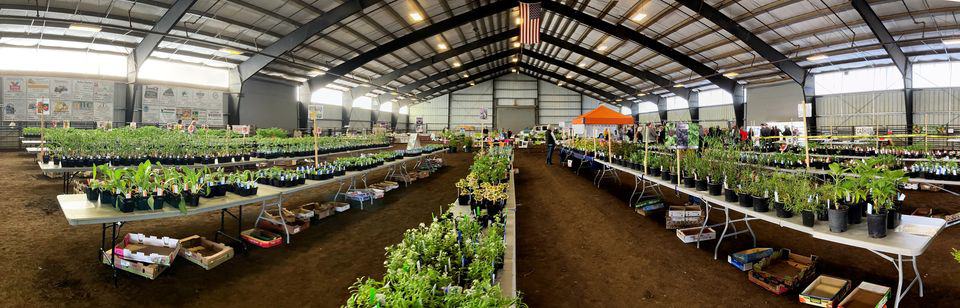
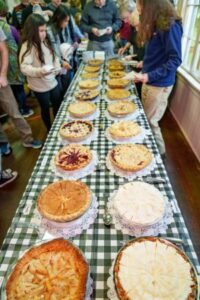 Starting in around 2010, the White Clover Grange began seeing a resurgence of membership and energy. Fueled by the persistence of members and support from granting agencies and individuals, the historic building has been restored and repaired. Currently the Grange is used by locals and visitors for celebrations, memorials, and concerts, as well as weekly meetings of dancers, recovery groups and crafters. Grangers host four community events each year, Pie Day, a Spring Garden Event, a Heritage Apple Fest, and the Holiday Bazaar. At the 2025 Apple Fest, over 200 community members taste tested local apples and pressed and sampled 80 gallons of apple cider. Attendees, including many families with young children, came out to enjoy a traditional harvest celebration.
Today, the White Clover Grange has four goals: to provide a community gathering place; to support local agriculture, including youth programs; to serve as a warming center during emergencies; and to maintain our historic building. In 2025, five young people representing the White Clover Grange 4H club showed cows at the County Fair, shepherded by long time 4H leader Vicky Porter.
Find more information at www.whitecloverGrange.org
The underlying principles of the Grange are unchanged since its founding—the same for current members as they were for the Grays. The Grange at all levels is strictly non-partisan. It does not endorse candidates for public office nor contribute to their campaigns. At the state and national level, the Grange lobbies for causes in accord with organizational policy. All policy within the Grange originates at the local level. Thus, the organization remains as one of America’s best examples of democratic, grass-roots activism.
The Grange motto:
In essentials, unity
in non-essentials, liberty
in all things, charity
* Vivi Tallman moved with her family to Nehalem in 1978 where they operated a small dairy. She is a founding board member of the Fire Mountain School and the Lower Nehalem Community Trust. Vivi is an herbalist, focused on medicinal plants that she grows and harvests on the North Coast. She is the current Master/President of the White Clover Grange.
