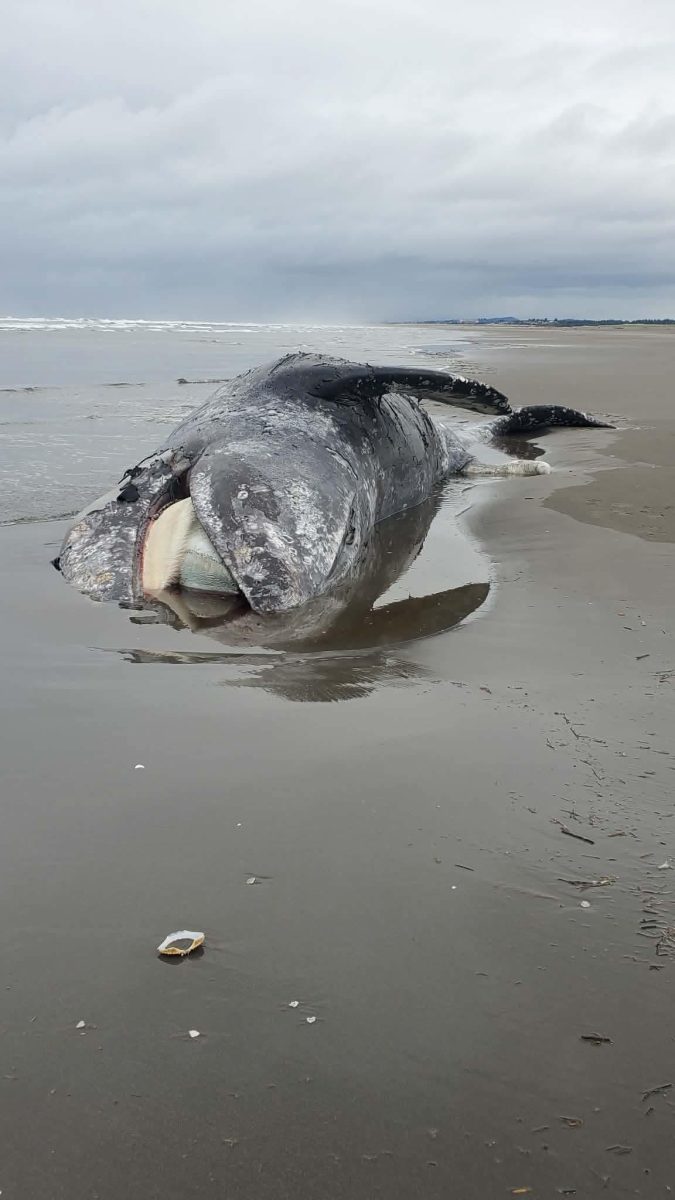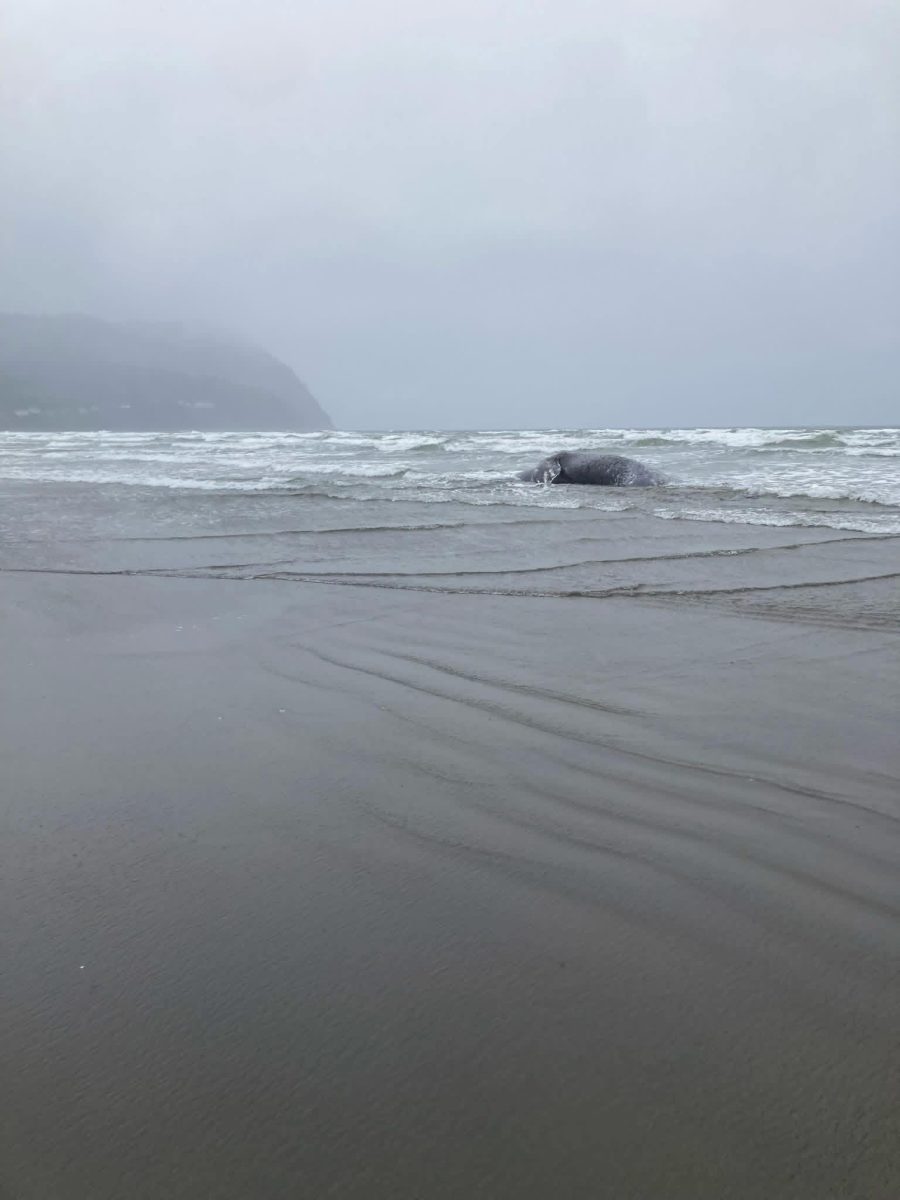



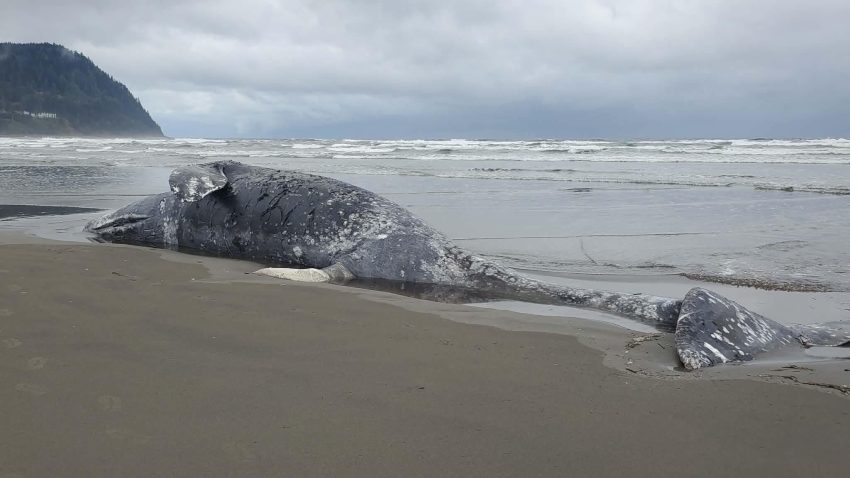
A 40-foot, male Gray whale washed ashore on the south end of Seaside Beach this morning, April 14, 2026. Seaside Aquarium reported that the whale had been spotted and reported floating off the beach a A necropsy has been scheduled for later this week. While the goal of any necropsy is to determine the cause of death, every necropsy is unique, and we learn from each one.
So, what happens during a necropsy? First, a wide array of measurements and photographs are taken. Any obvious signs of trauma or abnormalities are documented. Then, the team peels back the blubber layer to look for signs of trauma like hemorrhage (bruising), measures the blubber thickness, and examines the overall “health” of the blubber (color, oil content, texture, etc.). Samples of the blubber are taken and sent to a lab for further analysis. This may sound easy, but it can be quite a task. The blubber is thick and heavy. It can be hard to cut through and even harder to peel down due to the weight. A necropsy is all about teamwork, so while one portion of the team tackles the blubber, another team takes a closer look at the whale’s head. Samples of baleen and tongue are taken. Next, the team dives deeper into the whale looking for parasites, cancers, or other signs of disease. Next is the daunting task of getting samples from any organ the team can access. This varies for each whale depending on its size and position. In some whales, only their intestines are accessible, while in others the team is fortunate enough to sample the kidneys, lungs, liver, and stomach content (did you know that Gray whales have three stomachs?). Once all the samples have been taken and observations documented, the conversations begin. Each team member brings a unique perspective or insight into each necropsy, so everyone shares notes and overall thoughts. While the cause of death cannot always be determined, the team can come together and theorize what may have caused the animal’s death.
So, what happens now? It depends. Though smelly, it is best for the environment for the whale to remain unburied on the beach. The whale provides food for a wide range of scavengers, and as it decomposes, nutrients are transferred into the surrounding sand. However, there are times and places where a whale cannot simply remain on the beach. In those cases, the whale is buried or removed.
For everyone’s safety and to allow responders to do their work please stay at least 100 feet away and do not touch the whale.
⸻—————
A gray whale has come ashore today April 14, 2026 in Seaside, Oregon, near Avenue K. More information will be shared as updates become available from officials.
📷 Renee Thoreson and Ken Heman
Video by Tiffany Boothe, Seaside Aquarium