











By Robin Kostrikin
I have been watching the local, state, and national protests over immigration enforcement, and two questions keep coming to mind:
Why aren’t we also talking about the people who have been harmed by individuals who were in this country illegally and committed violent crimes?
And why are we not seeing the same level of public attention, advocacy, and outrage for the victims of violent crime and their families—especially those in our own communities who are still waiting for justice?
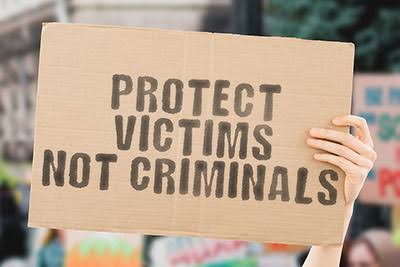
Where are the marches and protests for the victims of murder, rape, child sexual abuse, assault, and other violent crimes? Where are the signs with their names? Where are the calls for justice for their families? Where are the candlelight vigils honoring their lives?
Every victim deserves compassion, regardless of who committed the crime. Every family deserves to know that their loved one’s life matters and that their suffering has not been ignored.
Too often, it feels as though public discussion focuses primarily on protecting the rights of those accused of crimes or on broader immigration policy, while victims and their families are left out of the conversation. This creates a perception that some victims receive more attention, sympathy, or advocacy than others depending on the circumstances surrounding their case.
This should not be about choosing one group over another. We can believe in due process and constitutional protections for every person while also insisting that victims of violent crime are remembered, supported, and heard. Justice requires both fairness for the accused and compassion for those who have been harmed.
Many people have also questioned whether the current attention surrounding immigration enforcement is driven solely by concern for policy issues or whether it has become tied to broader political divisions. Some believe that certain voices have become much louder because of who is currently in office, particularly because of strong feelings—both support and opposition—toward President Trump. They argue that some individuals and organizations did not show the same level of public concern about immigration enforcement, border security, or victims of crimes committed by individuals in the country illegally before this political moment.
Regardless of political affiliation, consistency matters. If the goal is justice and compassion, those principles should apply at all times—not only when a particular issue becomes politically popular or connected to a person someone supports or opposes. Concern for victims should not depend on whether their story aligns with a political agenda.
Our judicial system is supposed to treat everyone equally, regardless of gender, culture, background, or the color of their skin. It is meant to uphold the rule of law, the spirit of the law, and the principles established by our Constitution.
However, many people have become concerned that the justice system is increasingly influenced by politics rather than operating as an independent and impartial institution. When people begin to believe that justice is applied differently depending on political interests, public trust in the fairness and integrity of that system is weakened.
In our own community, there are victims and families who are still waiting for answers, accountability, and justice. There are legitimate questions about how our local justice system handles certain cases—questions that deserve attention, transparency, and public discussion. Where are the protests and public advocacy for these victims in our own county? Why do local victims often receive far less media coverage and public support than national political issues?
Justice should not depend on politics. Compassion should not depend on a person’s immigration status. Public concern should not depend on whether a story fits a particular narrative.
If we are going to speak for justice, then we should speak for all victims—not only the ones whose stories receive national attention. We should stand for fairness, accountability, and equal treatment under the law.
Every life lost to violence matters. Every victim deserves to be remembered. Every family deserves to know their community stands with them, and that there is justice and accountability when laws are broken.
